
Spot Trouble in 2 Minutes: Home Nursing Notes Parents Can Use

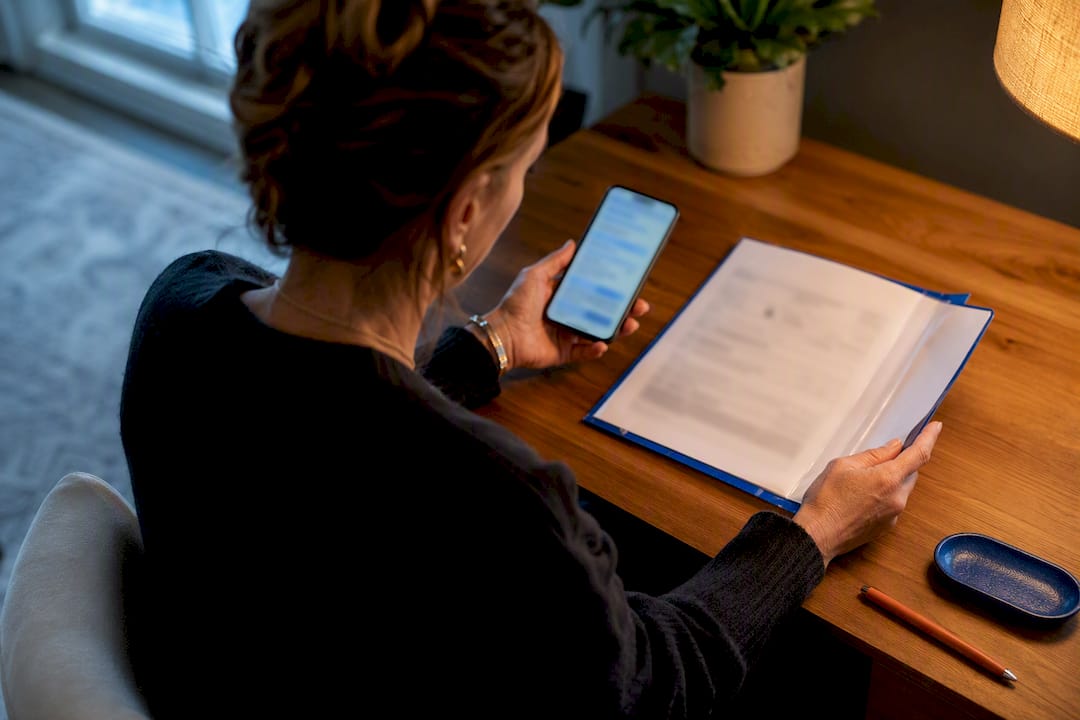
Home nursing notes and care summaries are your child’s nurse’s formal record of what happened during a visit: how your child looked, what treatments were given, and what needs to happen next. These documents do three things at once — they keep every caregiver on the same page, they capture the education you’ve received so responsibility is tracked, and they give Medicaid or your insurer the proof they need to keep approving hours. Opulentprivatecare treats this documentation as part of its continuity commitment, not paperwork bolted on afterward.
TL;DR:
Ensure that all visit notes include a signed signature, accurate timestamps, and detailed documentation of interventions to prevent claim rejections.
Regularly compare current notes with previous ones to identify vital sign changes and verify caregiver demonstrations of skills for legal and clinical accuracy.
Accurate documentation of significant changes, interventions, and pending follow-ups is crucial for maintaining authorized nursing hours and insurance approvals.
Keep organized, secure records either digitally or physically, with separate medication and note folders, to facilitate quick sharing and to ensure HIPAA compliance.
Agencies should provide clear guidance on report access, caregiver training, and error correction procedures to support thorough and consistent documentation practices.
Table of Contents
What Goes Into a Nursing Visit Note
A well-written visit note follows a predictable shape, and once you know the shape, you can scan one in under two minutes. Every note should carry the basics that make it legally and clinically valid, then move into what actually happened with your child.
Header details: date, start and end time, the nurse’s name and credentials, and a signature. Missing signatures are one of the most common reasons a claim gets kicked back.
Status statement: a plain sentence on how your child looked at the start of the shift compared to baseline.
Objective findings: vitals, oxygen saturation, lung sounds, feeding tolerance, seizure activity. This is what the nurse observed, not what she assumes.
Assessment: the nurse’s clinical interpretation of those findings, kept separate from the raw data.
Interventions performed: medications given with dose, route, and time, suctioning, tube feeds, wound care, each logged with enough detail that another nurse could pick up mid-shift.
Education provided: what the nurse taught you or another caregiver, and whether you demonstrated the skill back.
Plan and follow-up: who was contacted (the pediatrician, a specialist, the case manager) and what happens next.
Routine documentation is built around subjective report, objective assessment, clinical judgment, and a plan, and that four-part structure is what makes a note useful to anyone reading it after the fact, including you.
A Two-Minute Routine for Reading Notes and Spotting Trouble
You don’t need a nursing degree to catch what matters. Read the note the same way every time, and you’ll notice changes faster than you’d think.
Compare to the last note. Is anything different in vitals, feeding, breathing effort, or behavior? A single number rarely tells you much; a trend does.
Check the education line. Did the note record a new skill taught, and did you or the caregiver demonstrate it back? If a competency was reviewed but not confirmed, that’s a gap worth asking about.
Look for pending items. Anything flagged for the doctor, the case manager, or a follow-up visit needs a name and a date attached to it, not just “will monitor.”
Certain phrases and numbers deserve immediate attention rather than a wait-and-see approach: sustained oxygen saturation below your child’s documented baseline, a new or prolonged seizure, refused feeds over multiple attempts, or any note that says a physician was notified but doesn’t say what was decided.
Pro Tip: Keep a small notebook or phone note of your own observations between visits. When something you noticed lines up with something the nurse documented, that pattern is far more convincing to a doctor or reviewer than either observation alone.
Confirming that a caregiver demonstration was actually recorded matters legally, too. It establishes who is responsible for a task going forward, which becomes important if a nurse is out and a family member has to step in.
Why Documentation Determines Whether Nursing Hours Continue
Medical necessity, the standard payers use to approve or renew skilled nursing hours, lives or dies on what’s written down. A skilled intervention that isn’t documented essentially didn’t happen as far as an authorization review is concerned.
State pediatric private duty nursing policy typically requires agencies to keep organized clinical records, submit quarterly nursing summaries, and report significant changes in condition, often within five business days. Those quarterly summaries, built around measurable goals, are usually the single biggest factor in whether hours get renewed.
Watch for these common gaps that put approvals at risk:
Notes missing a nurse signature or timestamp
Vitals recorded without context (no baseline to compare against)
Interventions mentioned but not tied to a specific time or dose
Quarterly summaries that arrive late or get lost between agency and case manager
You can help by saving every note and summary as it arrives, reporting incidents to the agency the same day they happen, and asking directly for your quarterly summary if it hasn’t shown up on schedule.
Questions to Ask at Intake and a Documentation Checklist
Before care starts, or at your next care conference, ask the agency exactly how documentation works. The answers tell you a lot about how the agency runs.
How and when will I receive visit notes: through a portal, a PDF, or a printed packet?
How is caregiver competency recorded, and how often is training reassessed?
Who signs off on quarterly summaries, and when should I expect them?
What’s the process if I spot an error or want something added?
A short intake checklist worth keeping on hand: daily visit note, a current medication record, documented caregiver demonstration, a quarterly summary with measurable goals, and a clear signature trail on everything. If a note has a factual error, most agencies let you request a written addendum rather than an edit to the original record, which preserves the timeline while correcting the mistake.
Storing and Sharing Notes Without Losing Track of Them
A simple system beats a pile of papers every time. Set up one folder (physical or digital) per quarter, name files by date, and keep medication records separate from visit notes so you’re not hunting through both when a specialist asks a quick question.
Agency portal: fastest, usually time-stamped automatically, but only as good as the agency’s uptime.
Encrypted email or shared drive: works well for sending a packet to a new specialist.
Printed packet: still the most reliable backup for an ER visit or hospital admission, when Wi-Fi and logins aren’t an option.
Under HIPAA, you have the right to access and request copies of your child’s records, and only people involved in care or authorized by you should be viewing them.
Pro Tip: Keep one “grab and go” printed packet with the last 30 days of notes and the most recent quarterly summary. If your child ends up in the ER at 2 a.m., that packet saves the on-call doctor from starting from zero.
Opulentprivatecare’s Take on What Good Documentation Actually Prevents
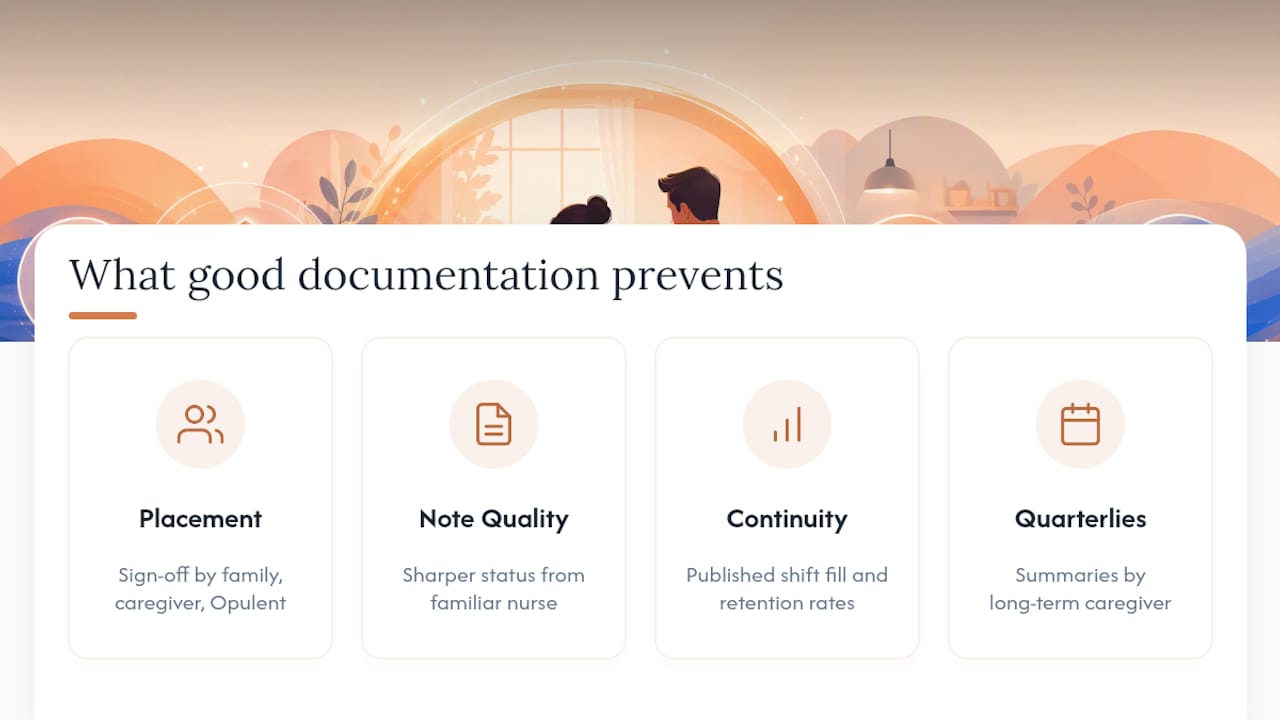
Most documentation problems trace back to a mismatched placement, not sloppy nurses. Opulentprivatecare’s “3 Thumbs Up Rule” requires sign-off from the family, the caregiver, and Opulent before a nurse ever starts a shift, and that fit shows up directly in note quality: a nurse who knows your child’s baseline writes a sharper, more useful status statement than one meeting your child for the first time.
We publish our shift fill rates and nurse retention numbers because families deserve a concrete way to judge whether continuity is real or just a promise. Consistent staffing means the caregiver training documented in March still reflects who’s showing up in June, and it means your quarterly summary is written by someone who has actually watched your child’s condition trend over three months, not skimmed a chart the day before.
— Opulent
Georgia Families: What to Do Next
Documentation only works when the nurse behind it knows your child well enough to write something specific instead of generic. That’s the whole premise behind Opulentprivatecare’s approach to in-home pediatric nursing across Georgia: tracheostomy and ventilator care, G-tube feeding support, seizure and cardiac monitoring, and caregiver training that gets documented, not just verbally reviewed.
Getting started is straightforward. Have your child’s current care plan, medication list, and any Medicaid or GAPP paperwork ready, and Opulentprivatecare’s team will walk you through nurse matching under the 3 Thumbs Up Rule before anyone sets foot in your home. If your child needs trach, vent, or G-tube support, that page details exactly how documentation and clinical oversight work for higher-acuity care. Ready to talk through your situation? Reach out to Opulentprivatecare and start the intake conversation this week.
Sources
For state-level PDN documentation standards, see Rhode Island’s pediatric PDN policy guidance. For continuity’s effect on outcomes, see this systematic review on home nursing services, and for family-centered care planning, see Opulentprivatecare’s guide to continuity of pediatric care.
This article is general information, not a substitute for advice from a qualified doctor. Consult a qualified healthcare professional about your own circumstances before acting on anything here.
Recommended
Comments