
Nurses Who Care for Newborns: Roles, Types, and Training

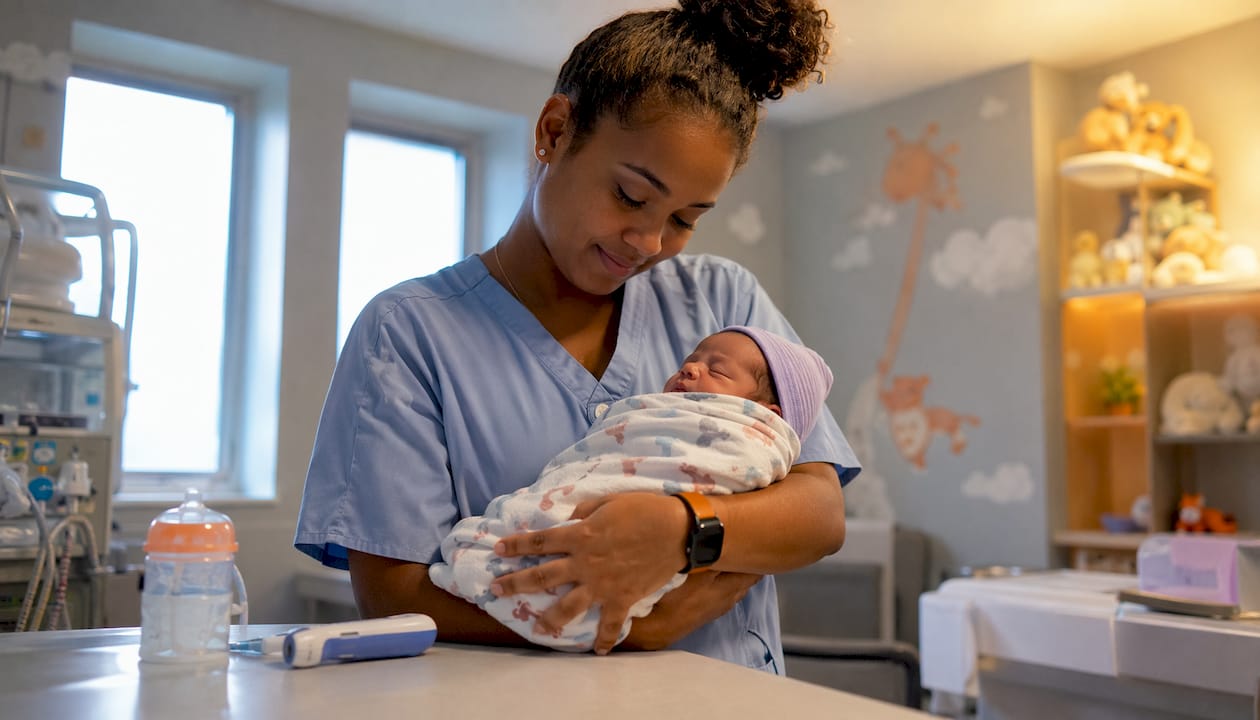
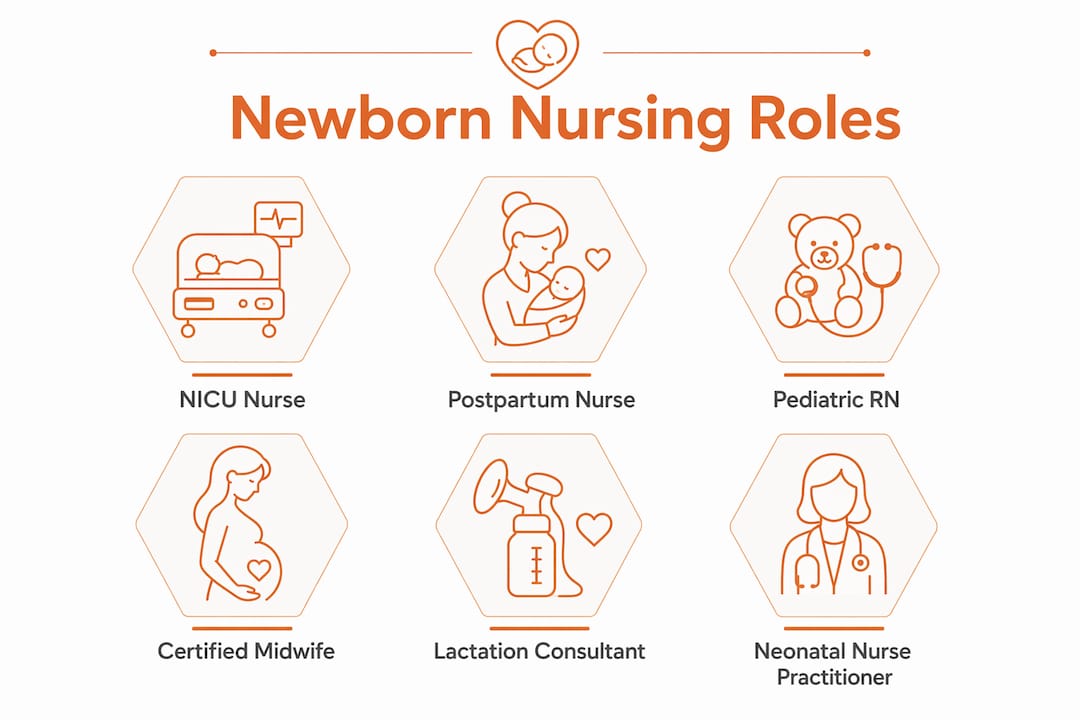
The nurses who take care of newborns are a distinct group of specialists, each trained for a specific slice of infant care. The core roles include the Neonatal Registered Nurse (Neonatal RN), the NICU Nurse, the Postpartum (Mother-Baby) Nurse, the Pediatric RN, the Certified Nurse Midwife (CNM), the Lactation Consultant, and the Neonatal Nurse Practitioner (NNP). These are not interchangeable titles. Each role carries its own scope, setting, and clinical demands.
Here is a quick breakdown of who does what:
Neonatal RN: Cares for newborns during the first month of life across multiple care settings, from well-baby nurseries to intensive care.
NICU Nurse: A neonatal RN working in a Level III or IV intensive care unit, managing premature or critically ill infants on ventilators and other life-support equipment.
Postpartum (Mother-Baby) Nurse: Focuses on both mother and infant in the hours and days immediately after delivery, covering recovery, infant feeding, and discharge education.
Pediatric RN: Covers patients from infancy through adolescence; in hospital settings, pediatric nurses often care for newborns with acute illness or injury.
Certified Nurse Midwife (CNM): An advanced practice nurse who manages labor, delivery, and early postpartum care, providing initial newborn assessment at birth.
Lactation Consultant: A credentialed specialist supporting breastfeeding during the first weeks of life, working with both mother and infant to address latch, supply, and feeding challenges.
Neonatal Nurse Practitioner (NNP): An advanced practice nurse with graduate-level training who diagnoses and manages complex neonatal conditions, often in the NICU alongside neonatologists.
The American Academy of Pediatrics and the National Association of Neonatal Nurses (NANN) both recognize neonatal nursing as a distinct specialty requiring focused training beyond general nursing licensure.
What does each type of newborn nurse actually do?
The roles above are not just different job titles for the same work. Each specialty operates in a defined clinical environment with its own daily tasks, patient acuity, and family-facing responsibilities.

Neonatal RN
The neonatal RN is the broadest category. These nurses work across all three major care levels that the American Academy of Pediatrics uses to classify newborn care settings:
Level I (Well-Baby Nursery): Healthy newborns. Duties include hearing and vision screenings, vaccinations, bathing, and teaching new parents basic infant care. Level I nurses also stabilize ill newborns until transfer to a higher-acuity unit.
Level II (Special Care Nursery): Moderately ill or premature infants, typically born at 32 weeks gestation or later. Nurses at this level manage IV fluid administration, oxygen therapy, specialized feeding, and mechanical ventilation support.
Level III/IV (NICU): The highest acuity. Nurses here manage sustained life support, monitor extremely low birth-weight infants, coordinate with surgeons and specialists, and provide continuous bedside observation.
NICU Nurse
NICU nurses are neonatal RNs who have trained specifically for intensive care. Their patients are often born prematurely or with congenital conditions requiring incubators, ventilators, and around-the-clock monitoring. Beyond the clinical work, NICU nurses carry a heavy family-support load. Parents of a critically ill newborn are frequently in crisis, and the nurse is often the first person explaining what a ventilator reading means or what a care plan change involves.
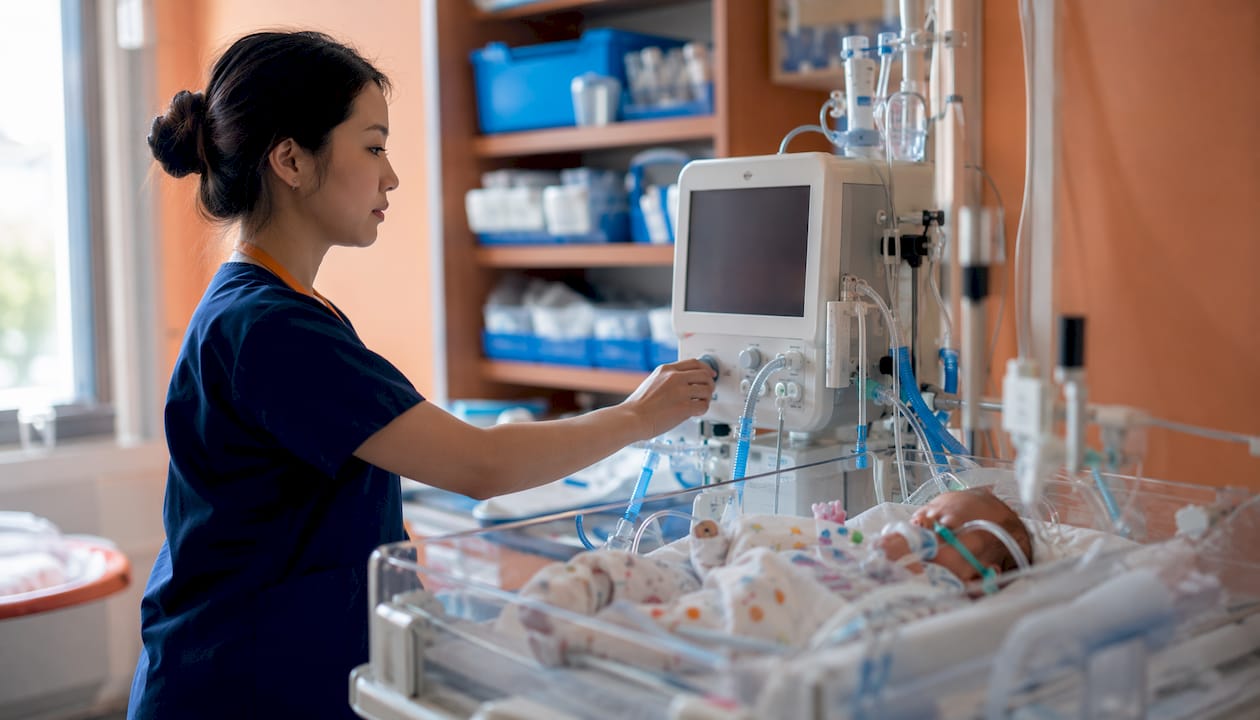
The NICU team is multidisciplinary, pulling in neonatologists, respiratory therapists, and patient care assistants. Nurses serve as the primary point of contact for families within that team. Some NICUs assign one nurse consistently to a given infant under a primary nursing model, which builds trust and continuity. Others rotate staff by shift. That difference in staffing structure shapes the family’s entire experience of the NICU.
Postpartum (Mother-Baby) Nurse
Postpartum nurses work in the mother-baby unit, typically for the 24–72 hours after delivery, a time when understanding private insurance options during pregnancy and parental leave-in-germany) can be critical for families. Their scope covers both patients simultaneously: monitoring the mother’s recovery from labor or cesarean section while assessing the newborn’s feeding, temperature regulation, jaundice levels, and weight. They are often the nurses who catch early signs of neonatal hypoglycemia or feeding difficulty before discharge.
Pediatric RN
Pediatric nurses care for patients from infancy through adolescence. In a hospital setting, they may manage newborns admitted for infection, jaundice requiring phototherapy, or surgical recovery. Pediatric intensive care unit (PICU) nurses handle the most critical pediatric cases, operating equipment like mechanical ventilators and dialysis machines.
Certified Nurse Midwife
A CNM holds a graduate-level nursing degree and national certification. During labor and delivery, the CNM manages the birth process and performs the initial newborn assessment, checking Apgar scores, airway, and reflexes. Their role in newborn care is concentrated at the moment of birth and in the immediate postpartum period.
Lactation Consultant
Lactation consultants, many of whom hold the International Board Certified Lactation Consultant (IBCLC) credential, specialize in the mechanics and physiology of breastfeeding. They work with mothers and infants during the first weeks of life, addressing latch problems, low milk supply, and feeding pain. In hospital settings, they often round on postpartum units daily.
Neonatal Nurse Practitioner
The NNP is an advanced practice registered nurse with a master’s or doctoral degree focused on neonatal care. NNPs can diagnose conditions, order and interpret tests, prescribe medications, and perform procedures like intubation and umbilical line placement. They function as mid-level providers within the NICU team, often managing patient care between physician rounds. Neonatal nurses at the advanced practice level also play a central role in teaching parents how to manage complex medical needs at home, which becomes critical when discharge approaches.
What education and certifications do newborn nurses need?
The path into neonatal nursing starts with a registered nursing license and branches significantly depending on the specialty and acuity level.
Core educational requirements:
Associate Degree in Nursing (ADN): Minimum entry point for RN licensure; some hospitals prefer or require a BSN for NICU positions.
Bachelor of Science in Nursing (BSN): The standard for most hospital-based neonatal and NICU roles; required for many Level III units.
Master of Science in Nursing (MSN) or Doctor of Nursing Practice (DNP): Required for NNPs and CNMs.
Key certifications for neonatal nursing staff:
Neonatal Resuscitation Program (NRP): Required for virtually all nurses working with newborns, including labor and delivery, postpartum, and NICU nurses. It certifies competency in resuscitating a newborn at birth.
RNC-NIC (Registered Nurse Certified in Neonatal Intensive Care): The primary board certification for NICU nurses, administered by the National Certification Corporation (NCC). It requires active RN licensure and documented NICU clinical hours.
C-EFM (Certified Electronic Fetal Monitoring): Common for labor and delivery nurses monitoring fetal heart rate during labor.
IBCLC (International Board Certified Lactation Consultant): The gold-standard credential for lactation consultants, requiring clinical hours and a national exam.
Specialized training and certification validate expertise and are often required for advancement into higher-acuity units or leadership roles.
Credential | Issuing Body | Who Needs It | Scope |
NRP | American Academy of Pediatrics / AHA | All newborn-facing nurses | Newborn resuscitation at birth |
RNC-NIC | National Certification Corporation | NICU RNs | Intensive neonatal care |
IBCLC | IBLCE | Lactation consultants | Breastfeeding support |
CNM Certification | AMCB | Certified Nurse Midwives | Labor, delivery, postpartum |
NNP Certification | NCC | Neonatal Nurse Practitioners | Advanced neonatal diagnosis and treatment |
Continuing education is not optional in this specialty. Neonatal care protocols shift as research evolves, and most certifications require periodic recertification with documented clinical hours and coursework.
How are neonatal nurses and NICU nurses different?
The confusion between these two terms is understandable. Every NICU nurse is a neonatal nurse, but not every neonatal nurse works in the NICU.
Neonatal nursing is the broad specialty covering care for newborns, generally from birth through the first month of life, though some neonatal nurses work with infants up to age two. They practice across all three care levels: the well-baby nursery, the special care nursery, and the NICU. A neonatal RN in a Level I unit spends most of her shift teaching a first-time mother how to swaddle and latch. That is a fundamentally different day than a Level III NICU nurse managing a 26-week premature infant on a high-frequency oscillator.
NICU nurses are neonatal nurses who have chosen, and been trained for, the highest-acuity end of that spectrum. The clinical demands are distinct: NICU nurses manage advanced life-saving interventions like ventilator management, umbilical arterial line monitoring, and total parenteral nutrition. The emotional weight is also different. Families in the NICU are often facing the possibility of long-term disability or infant death, and the nurse absorbs a significant portion of that fear alongside the clinical workload.
Outside the hospital entirely, some neonatal nurses provide post-discharge care in community clinics or family homes, supporting infants who have left the NICU but still need skilled nursing follow-up. That community-based role is a growing part of neonatal nursing that most people do not picture when they think of the specialty.
How in-home nursing extends newborn care beyond the hospital
Hospital discharge does not end the need for skilled nursing care, especially for infants who leave the NICU with ongoing medical needs. In-home nursing services for newborns involve registered nurses and licensed practical nurses who provide feeding assistance, health monitoring, and parent education during the vulnerable weeks after discharge.
For families of medically fragile infants, the transition home can feel abrupt. A baby who spent weeks on a ventilator or feeding tube does not suddenly become a typical newborn the moment she leaves the NICU. In-home nurses bridge that gap by managing equipment, teaching caregivers how to respond to medical changes, and providing the kind of consistent, hands-on support that a clinic visit every two weeks simply cannot replicate.
Typical services provided by in-home newborn nurses include:
Tracheostomy care and ventilator management
Feeding tube (G-tube or NG-tube) support and monitoring
Vital sign assessment and documentation
Seizure monitoring and neurological observation
Parent and caregiver training on medical equipment
Coordination with the infant’s medical team
One distinction families should understand: clinical in-home nurses, who are licensed RNs or LPNs, provide medical care. Non-clinical “baby nurses” offer household support like overnight feeding shifts and soothing. These are not the same service, and the difference matters enormously when an infant has complex medical needs.
Opulentprivatecare provides in-home pediatric nursing across Georgia for medically fragile children, including newborns and infants with tracheostomies, ventilators, feeding tubes, and neurological conditions. Their “3 Thumbs Up Rule” requires sign-off from the family, the nurse, and Opulentprivatecare before care begins, which means the match is intentional rather than whoever is available that shift. For Georgia families, Medicaid-funded programs like the Georgia Pediatric Program (GAPP) can cover skilled in-home nursing, and Opulentprivatecare assists families with that paperwork directly.
If your child has complex medical needs after discharge, specialized in-home care through Opulentprivatecare is worth a direct conversation.
Key Takeaways
Newborn nursing is a layered specialty with distinct roles at every level of care, from the well-baby nursery to the NICU to the family home.
Point | Details |
Seven core nursing roles | Neonatal RN, NICU Nurse, Postpartum Nurse, Pediatric RN, CNM, Lactation Consultant, and NNP each serve distinct functions in newborn care. |
Care levels shape nursing duties | The American Academy of Pediatrics classifies newborn care in Levels I through IV, with nursing responsibilities increasing sharply at each level. |
NICU nurses are a subset | Every NICU nurse is a neonatal nurse, but neonatal nurses also work in well-baby nurseries, special care units, and community settings. |
Certifications validate expertise | Key credentials include NRP for all newborn-facing nurses, RNC-NIC for NICU nurses, and IBCLC for lactation consultants. |
In-home nursing extends care | Skilled in-home RNs and LPNs provide medical care for medically fragile infants after hospital discharge, distinct from non-clinical baby nurses. |
Recommended
Comments