
First 72 Hours: SMA Home Nursing for Families & '3 Thumbs Up' Rule

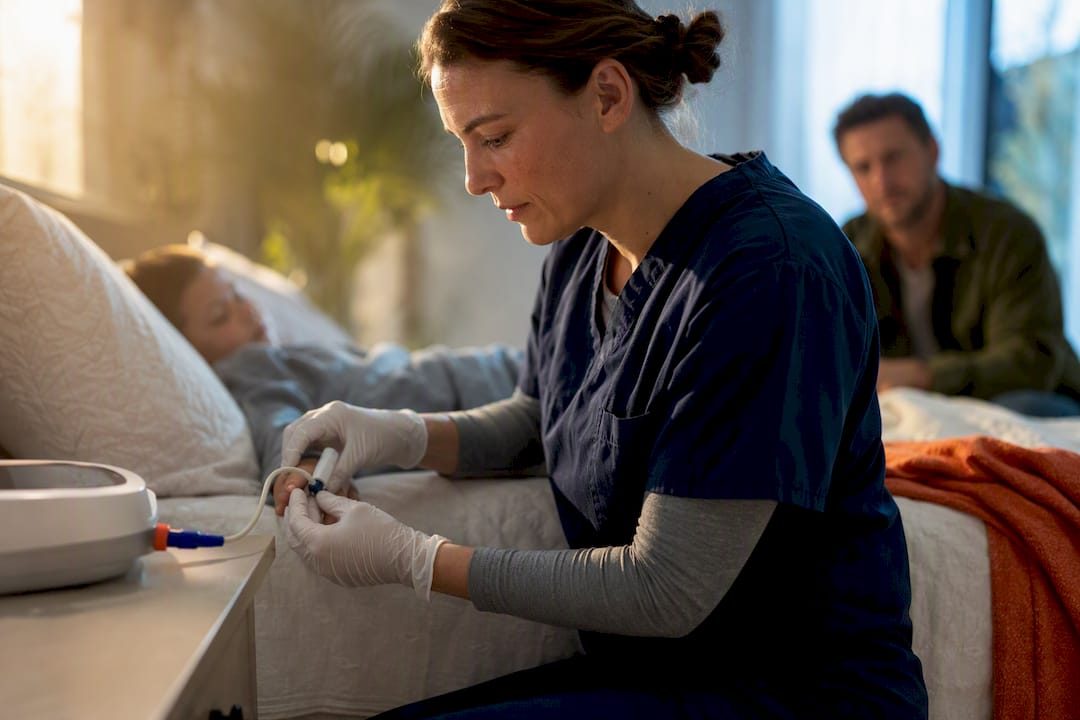
SMA home nursing brings skilled respiratory support, feeding management, and continuous medical monitoring into the child’s own bedroom instead of a hospital unit. Families typically seek it after a new SMA diagnosis, a hospital discharge involving a ventilator or feeding tube, or a decline in strength that makes overnight monitoring unsafe without trained help. The payoff is fewer emergency admissions and a caregiver who finally gets to sleep. If you’re ready to start that process, the steps for finding and authorizing care are covered further down.
TL;DR:
Families should understand that full-time home nursing for SMA involves managing complex respiratory devices like ventilators and cough assist machines, requiring detailed equipment knowledge.
Continuity of care depends heavily on nurse retention and consistent caregiver assignment, making agency reliability a crucial factor in choosing support services.
Emergency planning, including backup power supplies, clear oxygen saturation thresholds, and regular drills, is essential to ensure safety during respiratory crises.
G-tube care, feeding schedules, and routine site inspections require careful attention and prompt response to any signs of infection or tube dislodgement.
Coordinating with healthcare providers early and understanding Medicaid or GAPP funding pathways help families expedite the transition from hospital to home-based SMA nursing care.
Table of Contents
What Types of Home Nursing Are Available for SMA?
Spinal muscular atrophy affects children and adults differently depending on type, so the right nursing model depends heavily on how much respiratory and physical support someone needs. A baby with SMA Type 1 diagnosed before treatment often needs near-continuous skilled nursing for airway management. A teenager with Type 3 might need a few hours of skilled support daily, layered with therapy coordination and equipment troubleshooting.
Three general models cover most situations:
Skilled private duty nursing places an RN or LPN in the home for defined shifts, typically covering trach care, ventilator management, medication administration, and feeding.
24/7 nursing teams rotate multiple skilled nurses to provide round-the-clock coverage for children who are ventilator-dependent or have unstable airways.
Paid family caregiver programs let a parent or relative become the trained, compensated caregiver, often paired with periodic skilled nursing oversight.
Each model should include clear continuity expectations. Ask any agency how often the same nurse actually returns, not just whether coverage exists.
What Equipment and Devices Do Nurses Manage at Home?
A home caring for a child with SMA often looks more like a small clinical unit than a bedroom, and that’s by design. Nurses typically manage a rotating list of devices, and knowing what each one does helps families ask sharper questions.
BiPAP or noninvasive ventilators support breathing, especially overnight, when SMA-related muscle weakness makes unassisted breathing harder.
Tracheostomy and ventilator setups handle more severe respiratory involvement and require trained suctioning and alarm response.
Cough assist machines simulate a strong cough to clear secretions that weak chest muscles can’t move on their own.
Pulse oximeters track oxygen saturation continuously so drops get caught before they become emergencies.
Enteral feeding pumps deliver nutrition through a G-tube on a set schedule.
Wheelchairs, standers, and pressure-relief mattresses address mobility loss and prevent skin breakdown from prolonged sitting or lying.
Nurses generally handle clinical troubleshooting like alarm response and equipment calibration, while families handle daily logistics like supply ordering and charging backup batteries. Cure SMA maintains equipment guides that walk through the maintenance basics.
Pro Tip: Keep a labeled binder with your child’s exact device settings, serial numbers, and supplier phone numbers. When a fill-in nurse or a substitute therapist walks in during an emergency, that binder saves minutes you don’t have to spare.
How Does Home Nursing Support Therapy and Daily Function?
Nurses aren’t just there for medical tasks. They’re often the ones who keep home exercise programs consistent when parents are stretched between work, siblings, and appointments. A 2023 study on at-home physical therapy adjuncts found that structured home programs help maintain motor function in children with neuromuscular conditions, particularly when caregivers are trained to run sessions between formal therapy visits.
A workable daily structure often looks like this:
Morning respiratory clearance and medication administration.
Range-of-motion or stretching exercises, guided by the physical therapist’s plan.
School or schoolwork, with nursing support for feeding and positioning as needed.
Afternoon therapy exercises or a scheduled PT/OT session.
Evening feeding, respiratory check, and equipment setup for overnight support.
Coordination between the home nurse, school nurse, and outside therapists matters more than any single session. Professional guidance for pediatric neuromuscular care emphasizes not delaying referrals to specialist centers when function starts slipping, so a nurse who tracks small changes day to day becomes an early warning system.
What Does Respiratory Care and Emergency Planning Look Like?
Respiratory failure is the leading safety concern in SMA, and it’s where home nursing earns its keep. NINDS identifies respiratory compromise as one of the defining risks of the condition, which is why airway management sits at the center of most home care plans.
Daily respiratory routines typically include:
Scheduled BiPAP or ventilator checks, with settings adjusted by the pulmonologist as needed.
Cough assist sessions timed around feeds and sleep to clear secretions before they build up.
Continuous or scheduled pulse oximetry, with a documented threshold for when a saturation drop means calling the clinician versus calling 911.
Monthly or quarterly emergency drills covering suctioning, manual ventilation, and power failure response.
A recent study on home-based respiratory physiotherapy in nusinersen-treated patients with SMA types 2 and 3 found that a year of structured home respiratory programs was linked to stable pulmonary function and meaningfully better patient-reported quality of life. That’s a strong argument for treating respiratory therapy as a daily habit, not an occasional clinic visit.
Pro Tip: Write your oxygen saturation escalation threshold on a sticky note near the pulse oximeter. In a 2 a.m. emergency, nobody wants to be recalling a number from memory.
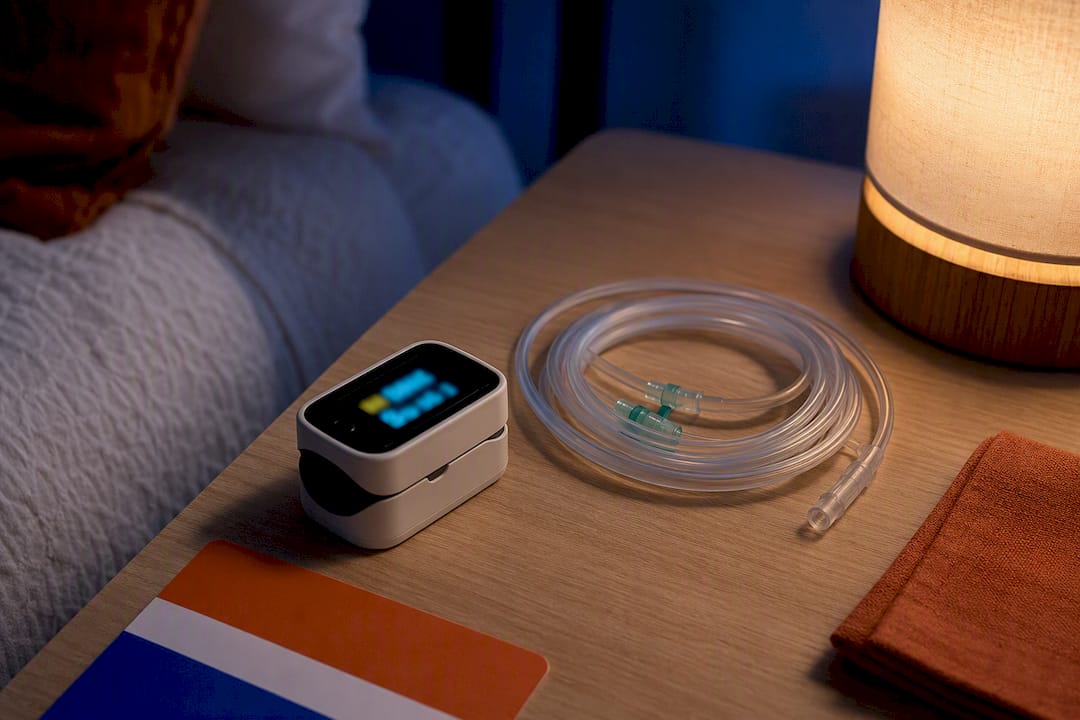
Every home with a ventilator-dependent child needs a backup power plan, a charged battery inventory, and a written list of what to do during an outage. Families managing tracheostomy and ventilator equipment specifically benefit from reviewing ventilator and tracheostomy care differences before the first shift starts, not during a crisis.
How Is Feeding and G-Tube Care Managed at Home?
Swallowing difficulty is common in SMA, and a formal swallow evaluation usually determines whether oral feeding is still safe or whether a G-tube is the better route. The Muscular Dystrophy Association recommends ongoing nutritional assessment as part of standard neuromuscular care, since feeding needs shift as strength changes.
For families managing G-tube feeds, the daily routine centers on a few core tasks:
Setting up the enteral pump with the correct formula, rate, and volume as prescribed.
Checking the G-tube site daily for redness, leakage, or skin breakdown.
Positioning the child upright or at an incline during and after feeds to reduce aspiration risk.
Flushing the tube properly before and after medications to prevent clogs.
Call clinical support if you notice persistent vomiting, a dislodged tube, or signs of infection at the insertion site. Those aren’t wait-and-see situations.
Which Home Modifications Matter Most for Safety?
Not every home needs a full renovation. Start with the changes that reduce fall and injury risk immediately, then layer in bigger projects.
Clear a direct, unobstructed path from the bed to the bathroom and any emergency exit.
Remove loose rugs and cords that create tripping or wheelchair-catching hazards.
Set up the bed at a height that makes transfers with a sliding board manageable for one caregiver.
Request an occupational therapy home assessment before buying ramps, lifts, or bathroom equipment.
Coordinate mobility equipment purchases with your durable medical equipment supplier early, since approval timelines can run longer than expected. A practical guide to mobility recovery setup covers the sequencing many families miss on the first pass. School transport and classroom accessibility deserve the same attention as the home itself.
How Do You Find, Authorize, and Start SMA Home Nursing?
Getting from a hospital bed to a fully staffed home nursing plan involves more paperwork than most families expect. Here’s the realistic sequence.
Contact your child’s neurologist or pulmonologist and hospital case manager first. They typically initiate the home nursing referral and can flag which agencies already work with your insurance or Medicaid program.
Gather core documents early, including diagnosis codes, a current care plan, medication lists, and physician orders for nursing hours.
Understand your payor pathway. Many families use Medicaid waiver programs like GAPP, which fund skilled nursing hours based on documented medical necessity, so incomplete paperwork is the most common cause of authorization delays.
Build a first-72-hours checklist covering medication reconciliation, supply inventory, nurse competency verification on your child’s specific equipment, and a written emergency contact sheet.
Ask agencies direct questions before care starts: How is nurse-family fit determined? What’s the actual shift fill rate? How often does the same nurse return?
Training at least three caregivers in emergency response sequences, including alarm silencing, manual ventilation, and suctioning, measurably reduces delays when something goes wrong at home. A hospital discharge to home nursing checklist can help you track every document before the transition date.
How Opulent Approaches Continuity and Family Fit
Reliable home nursing depends on more than a nurse showing up. It depends on the right nurse showing up, consistently. Some agencies use a “3 Thumbs Up Rule” requiring sign-off from the family, the nurse, and the agency before care begins to address common complaints about strangers arriving without prior meeting.
Families evaluating any agency should ask about measurable reliability, not just promises. Shift fill rate and nurse retention are the two numbers that predict whether “continuity of care” is a real practice or a marketing phrase. Some agencies handle GAPP and Medicaid paperwork directly and provide hospital discharge checklists to ease care plan transitions for families.
A Provider’s Perspective on Starting Home Nursing
Families rarely arrive at home nursing calmly. It usually follows a diagnosis, a hospital stay, or a scary night that made the risk real. What actually helps isn’t reassurance. It’s a nurse who returns tomorrow, and the week after, and a checklist that turns panic into a sequence of concrete steps.
— Opulent
How Opulent Can Help Your Family Get Started
Certain home nursing services focus on providing consistent, trained nurses who show up reliably to support families managing SMA. For families managing tracheostomy, ventilator, or G-tube needs, the Trach / Vent / G-Tube Pediatric Nursing service covers the specific clinical skills those devices demand, while the Family Caregiver option lets a trained parent or relative become the paid, primary caregiver where that fits better.
Before reaching out, gather your child’s diagnosis documentation, current physician orders, and any existing Medicaid or GAPP paperwork. Some providers assist families with GAPP enrollment and authorization steps to help expedite the transition from hospital discharge to home nursing care. If you’re already working with another provider and continuity has become the problem, the GAPP agency transfer process is designed to move your care plan without resetting the clock. Start by requesting a consultation through the in-home skilled nursing and GAPP program page to see how soon coverage can begin.
Where to Learn More
For clinical background on SMA, respiratory risk, and multidisciplinary care, NINDS offers a thorough overview. Cure SMA and the Muscular Dystrophy Association both publish family-facing equipment and care guides, while the SMA Foundation maintains hospital-to-home transition checklists worth reviewing before your first nursing shift.
This article is general information, not a substitute for advice from a qualified doctor. Consult a qualified healthcare professional about your own circumstances before acting on anything here.
Sources
FAQ
What is the life expectancy of SMA patients?
Life expectancy in SMA varies enormously by type and by access to modern treatment and respiratory support. Type 1, historically the most severe, once carried a life expectancy of under two years without intervention, but early treatment and strong home respiratory care have changed outcomes significantly for many children diagnosed today. Types 2 and 3 generally carry a normal or near-normal life expectancy, particularly with consistent respiratory monitoring and nursing support at home.
What is SMA in healthcare?
Spinal muscular atrophy is a genetic neuromuscular disease that causes progressive loss of motor neurons, leading to muscle weakness that affects breathing, swallowing, and movement. NINDS classifies it by severity and age of onset, ranging from Type 1, which appears in infancy, to milder adult-onset forms.
How old is the oldest known person living with SMA?
There’s no single verified record for the oldest person living with SMA, since milder adult-onset forms can go undiagnosed for decades and don’t always shorten lifespan. What’s well documented is that people with Types 3 and 4 SMA often live into older adulthood, especially with consistent physical therapy and respiratory monitoring.
How do people with SMA eat safely?
Many people with SMA eat orally with modified textures and careful positioning, guided by a swallow evaluation that identifies aspiration risk. When swallowing weakness makes oral eating unsafe or insufficient for nutrition, a G-tube provides a reliable feeding route, and a home nurse typically manages the pump schedule, site care, and positioning during feeds.
How much does SMA home nursing cost through Opulent?
Pricing for Opulent’s in-home nursing and family caregiver services depends on the child’s authorized nursing hours and Medicaid or GAPP approval, so current details are available directly through Opulent’s GAPP program page. Opulent also handles the paperwork needed to secure GAPP funding, which covers most of the cost for eligible Georgia families.
Recommended
Comments