
Nurse Matching Service for Children: 2026 Georgia Guide


What does a nurse matching service for children actually do?
A nurse matching service for children with complex medical needs does more than fill a shift. It pairs your child with a nurse whose clinical training, equipment experience, and personality fit your family’s specific situation. For kids managing tracheostomies, ventilators, feeding tubes, seizure disorders, or cardiac conditions, that fit is the difference between stable care and constant disruption.
These services typically cover:
Clinical needs assessment to map your child’s diagnoses, equipment, and daily care schedule
Candidate screening for credentials, background checks, and hands-on experience with specialized equipment
Compatibility review to align the nurse’s communication style and personality with your family
Ongoing administrative support, including Medicaid/GAPP authorization and insurance paperwork
Retention tracking so you know your nurse is staying, not rotating out every few weeks
Opulentprivatecare operates exactly this model in Georgia, with a particular focus on medically fragile children covered under the Georgia Pediatric Program (GAPP).
Table of Contents
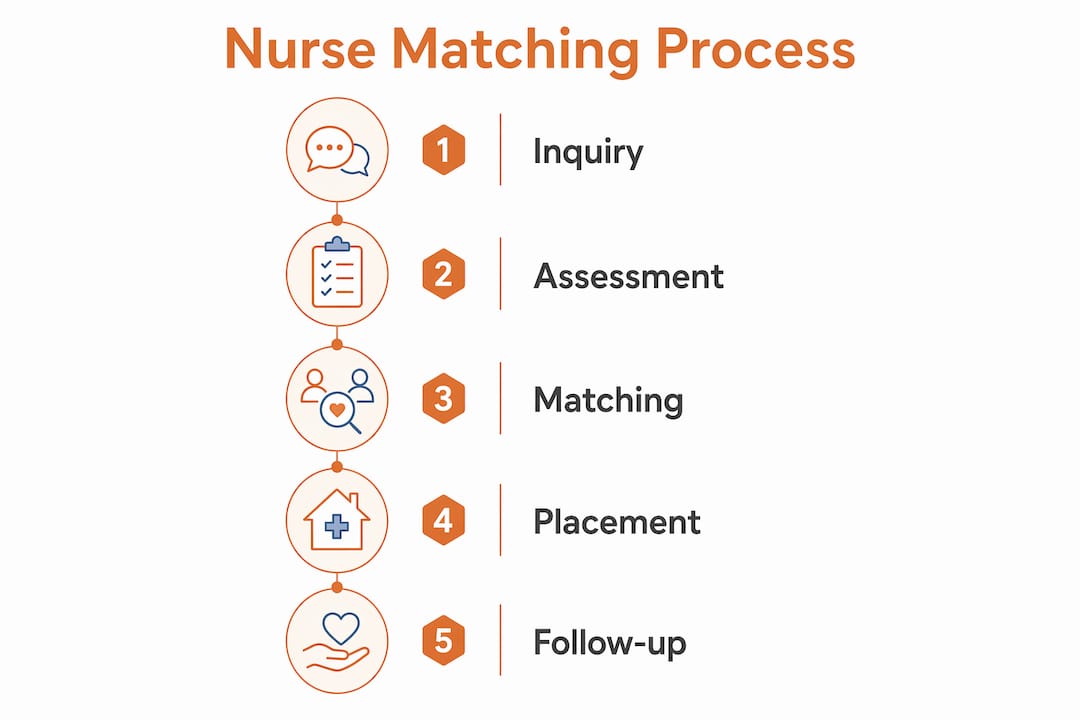
How the nurse matching process works, step by step
Initial consultation. You describe your child’s diagnoses, care schedule, home environment, and what has or hasn’t worked with previous caregivers. This shapes every step that follows.
Comprehensive needs assessment. The service documents clinical requirements in detail: ventilator settings, feeding tube protocols, seizure response plans, medication schedules. Nothing gets assumed.
Candidate screening. Nurses are vetted for licensure, relevant clinical experience, and background checks. An effective matching service also evaluates communication skills and proactive family coordination, not just credentials.
Fit review. A formal mutual interview, sometimes including a trial shift, confirms that the nurse’s skills match your child’s equipment needs and that the personality fit is real. Skipping this step is where most placements fail.
Medicaid and GAPP paperwork. For Georgia families, navigating GAPP authorization is one of the heaviest administrative burdens. A strong service handles documentation and coordinates between your family, the nurse, and the payer.
Placement and ongoing support. From inquiry to active placement, timelines vary by case complexity, but families should expect several weeks for a thorough match. After placement, the service monitors shift fill rates and nurse retention to catch problems early.
How to evaluate a pediatric nurse matching service
The clearest signal of a reliable service is whether it publishes its own performance data. Shift fill rates and nurse retention numbers tell you more than any testimonial. If an agency won’t share those figures, that’s your answer.
Ask directly: How often do nurses leave within the first six months? What happens when a nurse calls out? Does the service have backup coverage, or does your family scramble?
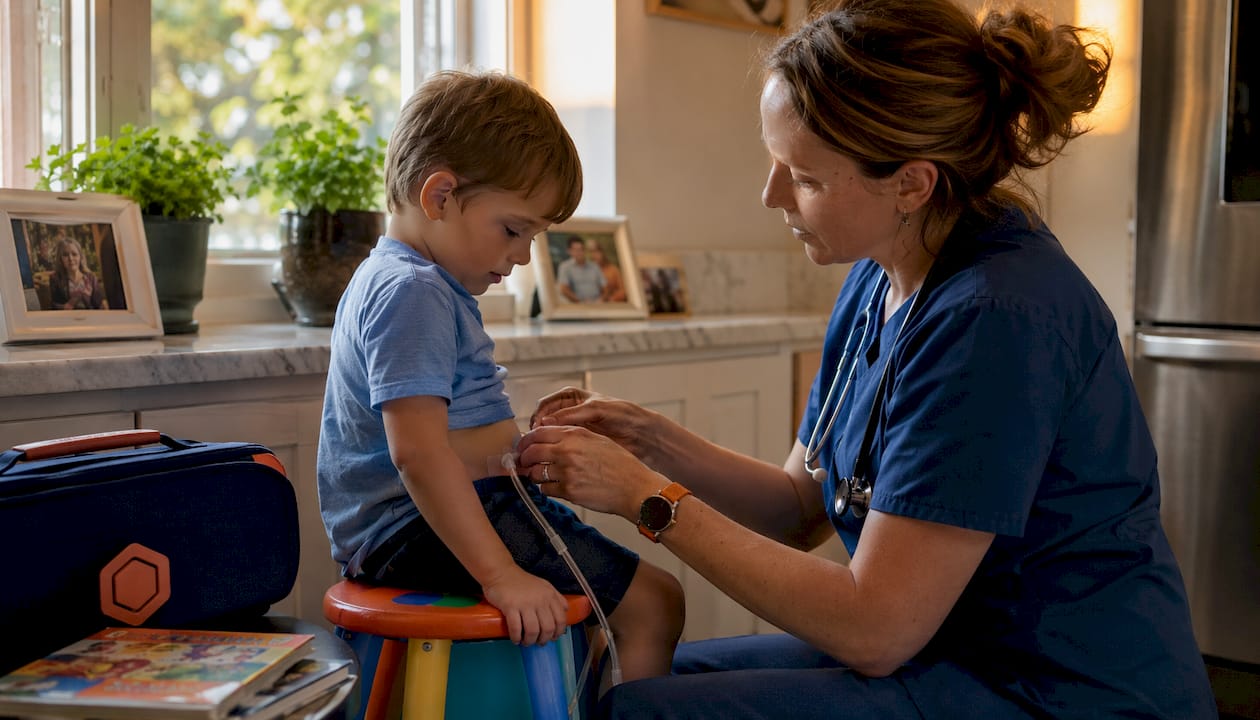
Families managing complex care arrangements know that continuity isn’t a preference. A nurse who knows your child’s baseline, their quirks, their equipment tolerances, is clinically safer than a rotating stranger. High retention reduces medical risk, full stop.
Also verify that the service requires three-way approval before any placement begins: your family, the nurse, and the organization all need to agree. That structure protects everyone.
What does pediatric nursing care cost, and does insurance cover it?
For families in Georgia whose children qualify under GAPP, Medicaid covers skilled in-home nursing hours, which removes most out-of-pocket cost for the nursing care itself. The matching service’s administrative and coordination work is typically built into the billing arrangement with Medicaid rather than charged separately to families.
Private-pay arrangements vary. Placement fees, hourly nursing rates, and service structures differ by provider and are not publicly standardized. Ask any service to walk through its fee structure before you commit.
Pro Tip: Before your first consultation, pull together your child’s current care plan, equipment list, and any prior nursing documentation. Services that do thorough assessments will ask for all of it, and having it ready cuts days off the timeline.
Opulentprivatecare: pediatric nurse matching built for Georgia families
Opulentprivatecare was built specifically for families like yours in Georgia. Every placement goes through the 3 Thumbs Up Rule: the family, the nurse, and Opulentprivatecare all approve the match before care begins. No one starts until everyone is confident.
The clinical depth is real. Opulentprivatecare nurses are experienced in tracheostomy, ventilator, and feeding tube management, along with seizure, cardiac, and neurological care. The team also handles GAPP paperwork and Medicaid authorization directly, so you’re not navigating that alone.
Shift fill rates and nurse retention metrics are a key focus. You can inquire about these performance indicators before you decide. To get matched with a nurse who fits your child, start here.
Key Takeaways
A reliable nurse matching service for children pairs clinical expertise with family compatibility and handles Medicaid paperwork, giving medically fragile children consistent, specialized in-home care.
Point | Details |
Fit review is non-negotiable | A formal mutual interview or trial shift confirms clinical and personality compatibility before placement. |
Retention data matters most | Ask for published shift fill rates and nurse retention numbers before choosing any service. |
GAPP covers skilled nursing in Georgia | Medicaid-funded GAPP authorization removes most out-of-pocket nursing costs for qualifying families. |
Three-way approval protects everyone | Requiring family, nurse, and organization sign-off before placement starts reduces early turnover. |
Opulentprivatecare applies all of this | Opulentprivatecare uses the 3 Thumbs Up Rule, publishes performance metrics, and manages GAPP paperwork for Georgia families. |
Recommended
Comments