
Home Nursing for Children with Cerebral Palsy: A Family Guide


Cerebral palsy home nursing is skilled clinical care delivered in your child’s home by licensed nurses, typically an RN or LPN, who manage medical needs that cannot safely wait for a clinic visit. Think tracheostomy care, gastrostomy tube feedings, seizure monitoring, ventilator management, and complex medication regimens. The clinical term for this service is private-duty nursing or pediatric skilled home nursing, and it sits within the broader umbrella of home health services. According to NINDS, cerebral palsy encompasses a group of permanent movement and posture disorders caused by early differences in brain development, and its clinical presentations vary widely enough that some children need daily nursing support while others need only periodic therapy.
If you are reading this because your child was just discharged or is about to be, here are your first three moves:
Arrange a clinical assessment. Ask your child’s hospital discharge planner or pediatrician for a referral to a home health agency that specializes in pediatric skilled nursing. The assessment determines the level of care and drives the physician’s orders.
Check Medicaid and waiver eligibility. Medicaid is the primary public payer for pediatric home health in the United States. Many states also run pediatric waiver programs that cover private-duty nursing hours beyond standard Medicaid limits.
Build a short list of agencies. Ask the discharge team, your child’s neurologist, and local cerebral palsy parent groups for names. Aim for two or three candidates you can interview before committing.
Key Takeaways
Skilled pediatric home nursing for children with cerebral palsy is most effective when families verify Medicaid eligibility early, choose a continuity-focused provider, and maintain a single, current plan of care shared across every member of the team.
Point | Details |
Start with Medicaid eligibility | Check Medicaid and state waiver options before comparing agencies; most pediatric skilled nursing is publicly funded. |
Demand continuity metrics | Ask every agency for their shift-fill rate and nurse retention rate as actual numbers before signing anything. |
Build one shared care document | Keep a single, updated plan of care accessible to every provider, the school nurse, and emergency responders. |
Plan the hospital-to-home transition early | Request a home nursing referral at least five to seven business days before discharge to avoid coverage gaps. |
Opulentprivatecare for Georgia families | Opulentprivatecare offers nurse matching, GAPP paperwork assistance, and published continuity metrics for medically fragile children statewide. |
Table of Contents
Who is on the home care team and what each professional does
How an individualized plan of care is created and common care goals
Funding, insurance, and community resources for home nursing
How a specialist pediatric nursing provider addresses family pain points
Steps for transitioning from hospital or rehab to home nursing care
Opulent Private Care: pediatric nursing built around your child
What cerebral palsy home nursing looks like in practice
Skilled nursing in the home is not the same as babysitting or companion care. A licensed nurse follows physician-signed orders, documents every visit in a clinical record, and performs procedures that require a clinical license to carry out safely. Cerebralpalsy describes home care services as covering a wide range of clinical and supportive tasks that vary by the child’s severity and specific needs.
Children who typically need home nursing include those with:
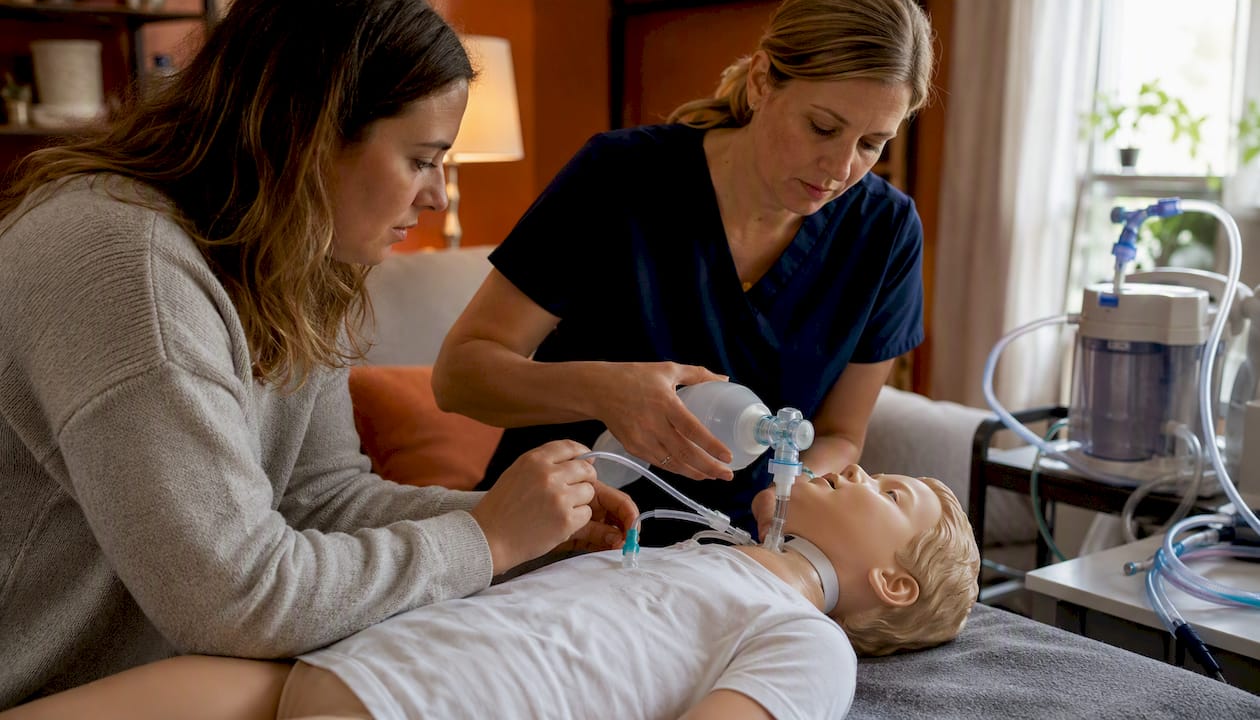
Tracheostomy tubes requiring suctioning, site care, and emergency tube changes
Gastrostomy or jejunostomy feeding tubes with formula management and skin care
Frequent or prolonged seizures requiring rescue medication administration and monitoring
Ventilator dependence or chronic respiratory compromise
Complex, multi-drug medication schedules with narrow therapeutic windows
Severe spasticity with positioning needs that carry skin-integrity risks
Care goals in this setting go beyond keeping a child medically stable. A well-designed plan targets safety at home, symptom control, developmental support through positioning and sensory routines, and family training so parents can manage between nursing shifts. Mayo Clinic’s clinical overview of cerebral palsy underscores that management is lifelong and multidisciplinary, which is exactly why home nursing works best when it is coordinated with the child’s full care team rather than operating as a standalone service.
Types of home nursing and care options
Not every family needs the same model. The right fit depends on your child’s medical acuity, how many hours of coverage you need, and what your insurance or Medicaid plan will authorize.
Agency home health (intermittent skilled nursing visits). A home health agency sends an RN or therapist for time-limited visits, typically one to a few hours, to perform skilled tasks and train family caregivers. Best for children with moderate needs who are medically stable between visits. Covered by most Medicaid plans and many private insurers.
Private-duty nursing (PDN). A nurse is present for extended shifts, often 8–12 hours, to provide continuous skilled care. This is the standard model for children with tracheostomies, ventilators, or seizure disorders that require constant monitoring. Authorized through Medicaid waiver programs or private insurance prior authorization.
Live-in nursing. A nurse lives in the home and provides care around the clock, typically on a rotating schedule with a second nurse. Expensive and harder to staff, but appropriate for the highest-acuity children.
Respite nursing. Short-term relief coverage so primary family caregivers can rest. Some Medicaid waivers fund respite hours separately from routine nursing hours.
Clinic-to-home transition programs. Hospital-based programs that bridge the gap between discharge and established home nursing. A hospital nurse or care coordinator may do the first home visit to ensure the setup is safe and the family is trained.
A quick note on agency types: A licensed home health agency (HHA) employs nurses directly, carries liability, and bills insurers. A private registry matches families with independent nurses but may leave more administrative and liability responsibility with the family. Managed pediatric nursing companies, like Opulentprivatecare, specialize in medically fragile children and typically offer nurse matching, Medicaid paperwork support, and continuity-focused staffing as part of their model.
Who is on the home care team and what each professional does
A pediatric home nursing team rarely consists of one person. For children with cerebral palsy, expect a roster that includes clinical and therapeutic disciplines working from a shared plan of care.
Registered Nurse (RN). Leads clinical assessment, performs and supervises skilled procedures (trach care, IV medications, wound care), and trains family members. Look for pediatric or NICU/PICU experience and specific trach/vent competency verification.
Licensed Practical Nurse (LPN). Carries out nursing tasks under RN supervision, including medication administration, feeding tube management, and vital sign monitoring. Common for overnight or extended shifts.
Certified Nursing Assistant (CNA) / Home Health Aide (HHA). Provides personal care: bathing, dressing, transfers, and feeding assistance. Does not perform skilled nursing procedures independently.
Physical Therapist (PT). Addresses mobility, strength, positioning, and transfer safety. In-home PT sessions focus on functional goals in the child’s actual environment.
Occupational Therapist (OT). Works on fine motor skills, adaptive equipment use, self-care routines, and home modifications.
Speech-Language Pathologist (SLP). Manages feeding and swallowing safety, communication device programming, and oral-motor therapy.
Respiratory Therapist (RT). Manages ventilator settings, trach care protocols, and airway clearance techniques. For any child on a home ventilator, an RT should be part of the team.
Registered Dietitian (RD). Calculates formula needs, monitors growth, and adjusts feeding plans for tube-fed children.
Medical Social Worker (MSW). Coordinates community resources, assists with insurance appeals, and supports family mental health and crisis planning.
For a child with a tracheostomy, you should expect both an RN and an RT involved in the plan of care. For a child with significant feeding challenges, the SLP and RD should be collaborating on the same feeding protocol.
How an individualized plan of care is created and common care goals
The plan of care (POC) is the legal and clinical roadmap for every home nursing service. Medicaid requires a physician-signed POC before authorizing home nursing hours, and most private insurers follow the same standard.
The typical workflow from referral to active nursing:
Referral. The hospital discharge planner, pediatrician, or specialist refers the family to a home health agency or private-duty nursing provider.
Clinical assessment. An RN visits the home (or the hospital before discharge) to evaluate the child’s medical needs, the home environment, and family training needs.
Physician orders and authorization. The child’s physician signs orders specifying diagnoses, procedures, medications, and nursing hours. The agency submits these to Medicaid or the insurer for prior authorization.
Plan of care creation. The agency compiles the POC, which includes all disciplines, goals, and protocols. The family reviews and signs it.
Periodic review. Most payors require a POC update every 60 days. Clinical changes should trigger an earlier update.
Common components of a pediatric plan of care:
POC Component | What it covers |
Medication administration record | All medications, doses, routes, and schedules |
Feeding and nutrition plan | Formula type, volume, rate, tube site care, and oral feeding guidelines |
Mobility and transfer protocols | Safe positioning, equipment use, and transfer techniques |
Seizure action plan | Seizure type descriptions, duration thresholds, rescue medication steps, and 911 criteria |
Emergency contacts and escalation | Primary care, specialists, equipment vendors, and 911 triggers |
Coordination checklist to keep the plan current:
Share the POC with every provider, including the school nurse and therapists
Update the medication list after every prescription change
Document any new equipment or supply changes in the POC
Schedule a family care conference at each 60-day review
Keep a printed copy accessible in the home at all times
How to find and choose a qualified home nurse or agency
The interview process matters more than most families realize. A nurse who is clinically competent but a poor fit for your child’s personality and routine will not last, and turnover is one of the most disruptive things that can happen in pediatric home nursing.
Before the first interview, gather:
Current physician orders and the most recent clinical notes
A complete equipment and supply list (ventilator model, trach tube size, feeding pump brand)
Your insurance card and Medicaid ID
A written summary of your child’s daily routine and behavioral cues
Questions to ask every agency:
What pediatric-specific training do your nurses complete before their first shift?
Do your nurses have documented competency in tracheostomy care, ventilator management, or PEG tube care (whichever applies)?
What is your current shift-fill rate and nurse retention rate for pediatric cases?
Will my child have a consistent primary nurse, or will we see rotating staff?
How do you handle a no-call, no-show situation?
Do you assist with Medicaid or waiver paperwork and prior authorization submissions?
Red flags to watch for:
No published or shareable references from pediatric families
Vague answers about documentation practices or clinical competency verification
Frequent agency-initiated substitutions without family notification
No clear escalation protocol for clinical emergencies
Pressure to sign a contract before a clinical assessment is completed
Pro Tip: Ask specifically for the agency’s shift-fill rate and nurse retention rate as numbers, not descriptions. A reputable pediatric nursing provider should be able to give you a figure. If they cannot, that tells you something important about how they track their own performance.
Funding, insurance, and community resources for home nursing
Cost is the question families ask first, and the honest answer is that most pediatric skilled nursing for children with cerebral palsy is funded through public programs, not out-of-pocket payment.
Primary funding pathways:
Medicaid. The largest public payer for pediatric home health. Covers skilled nursing visits and, through waiver programs, extended private-duty nursing hours. Eligibility is income- and diagnosis-based. Check Medicaid for your state’s specific program and waiver options.
State pediatric programs (e.g., GAPP in Georgia). Some states run dedicated programs for medically fragile children that fund nursing hours above standard Medicaid limits. Georgia’s GAPP program is one example, covering skilled nursing for children who meet medical necessity criteria.
Private insurance. Many commercial plans cover home health visits and some private-duty hours, but prior authorization is almost always required. Coverage limits vary significantly by plan.
Supplemental Security Income (SSI). Children with disabilities may qualify for SSI, which also opens a pathway to Medicaid in most states.
School-based services (IDEA). The Individuals with Disabilities Education Act requires schools to provide related services, including nursing support, during school hours for eligible children. This does not replace home nursing but reduces the total hours families need to fund privately.
Community and nonprofit grants. Organizations like United Cerebral Palsy and local disability foundations sometimes offer equipment grants and respite funding. The Autism Victory financial assistance guide also covers broader family financial programs that may apply to families managing long-term in-home care.
Steps to verify coverage and request prior authorization:
Call the member services number on your insurance card and ask specifically about “private-duty nursing” and “pediatric skilled nursing” benefits.
Request the clinical criteria your insurer uses to approve nursing hours.
Ask your child’s physician to write a letter of medical necessity that addresses those criteria directly.
Submit the physician orders, clinical assessment, and letter of medical necessity together.
If denied, request a peer-to-peer review between the insurer’s medical reviewer and your child’s physician.
For Medicaid waiver applications, ask your agency whether they assist with GAPP documentation and submission, because the paperwork is intensive and errors delay authorization.
Costs and what families should expect
Most families with Medicaid or a state pediatric program pay little to nothing out of pocket for authorized nursing hours. The picture changes significantly for families relying on private insurance or paying privately.
Billing model | Typical use case | Cost driver |
Hourly private-duty nursing | Extended daytime or overnight shifts | Clinical acuity, night differential, vent/trach complexity |
Shift-based (8- or 12-hour) | Continuous coverage for high-acuity children | Shift length, weekend/holiday rates |
Agency-billed skilled visits | Intermittent, time-limited skilled tasks | Number of visits per week, discipline mix |
Live-in flat rate | Around-the-clock coverage | Two-nurse rotation, housing logistics |
Major cost drivers families should understand:
Night coverage commands a premium over daytime rates in most markets
Ventilator-dependent children require nurses with specific vent competency, which narrows the pool and can increase cost
Rural locations may carry travel surcharges or limit available nurses
Higher nursing hours per day mean higher total weekly costs, even when the hourly rate is covered
Documentation to keep for appeals and authorization increases:
Every nursing visit note (request copies from your agency)
A log of clinical events: seizures, respiratory distress episodes, feeding intolerance
Growth and weight records if your child is tube-fed
Any emergency room visits or hospitalizations, with dates and diagnoses
When an insurer reduces authorized hours at renewal, this documentation is what your physician uses to argue for restoration.
Preparing your home and equipment for safe in-home nursing
A nurse cannot work safely in a cluttered or unprepared space, and some equipment requires specific electrical and storage conditions. Getting the home ready before the first shift protects your child and your nurse.
Home preparation checklist:
Clear pathways wide enough for a wheelchair and a second adult moving alongside it
Designate a dedicated nursing station: a clean surface with good lighting near the child’s primary care area
Install a surge-protected outlet strip for ventilators and feeding pumps; confirm the circuit can handle the load
Secure all medications in a locked cabinet or box, with a separate sharps container
Post emergency numbers, the seizure action plan, and the trach emergency protocol at eye level near the child’s bed
Confirm your home address is clearly visible from the street for emergency responders
Common durable medical equipment (DME) for children with CP:
Hospital bed with adjustable positioning and side rails
Hoyer lift or ceiling track lift for safe transfers
Suction machine with backup catheters and tubing
Home ventilator with backup battery and alarm system
Enteral feeding pump with extension sets and formula storage
Pulse oximeter and apnea monitor where indicated
Wheelchair, stander, or specialized seating system
DME is typically ordered by the physician and supplied through a DME vendor who bills Medicaid or insurance directly. Ask your agency to confirm which supplies they bring versus which the DME vendor provides, so nothing falls through the gap on the first shift.
Pro Tip: Run a brief emergency drill with your nurse on the first shift: practice the trach emergency steps, confirm where the backup equipment is stored, and walk through the 911 call protocol together. Families who do this once rarely have to improvise in a real emergency.
The National Resource Center for Pediatric Medical Home publishes device checklists and safe-transfer guidance that can help you confirm your setup before nursing begins. For caregiver skill-building and training modules, the Administration for Children and Families offers technical assistance resources relevant to in-home care.
How a specialist pediatric nursing provider addresses family pain points

Most families do not realize how much of the home nursing burden is administrative until they are in the middle of it: prior authorization renewals, nursing hour appeals, documentation gaps, and the constant anxiety of not knowing whether tomorrow’s shift will be covered.
Opulentprivatecare addresses this directly. Their model for Georgia pediatric in-home nursing covers skilled nursing for children with tracheostomies, ventilators, feeding tubes, seizure disorders, and complex neurological conditions, with active assistance on Medicaid and GAPP paperwork as part of the service. Nurse matching is based on both clinical competency and family fit, using what they call the “3 Thumbs Up Rule”: the family, the nurse, and Opulentprivatecare all approve the match before care begins.
Metrics families should request from any provider:
Shift-fill rate: What percentage of authorized shifts are actually covered? A high-performing pediatric nursing provider should be able to give you a number. Provider-side continuity practices, including published shift-fill rates and structured handoffs, are practical predictors of fewer disruptions and higher family satisfaction.
Nurse retention rate: How long do nurses stay on a given case? Frequent turnover means your child is constantly re-orienting new nurses to their routines and medical needs.
Time to start after authorization: How many days between Medicaid approval and the first nursing shift? Delays here leave families without coverage during a vulnerable period.
When you interview any provider, ask for these figures in writing. If a provider cannot produce them, ask why. Vague answers about “our commitment to continuity” are not the same as a documented retention rate.
Steps for transitioning from hospital or rehab to home nursing care
Hospital-to-home transitions are where most care breakdowns happen. The window between discharge and established home nursing is clinically risky, and planning it well requires starting earlier than most families expect.
Start the process before discharge:
Ask for a hospital social worker or discharge planner on day one of any admission that looks like it will require home nursing afterward
Request a home nursing referral at least five to seven business days before the anticipated discharge date
Confirm that the home health agency has received and reviewed the physician orders before the child leaves the hospital
During the transition:
Schedule a pre-discharge home visit from the agency’s RN if possible, so the nurse sees the home setup before the first solo shift
Complete all family training on trach care, feeding tube management, or ventilator alarms while still in the hospital, where backup is immediately available
Confirm DME delivery is scheduled for the day before discharge, not the day of
After discharge:
The first 72 hours at home are the highest-risk period. Have a nurse present for the first shift even if you feel confident managing independently
Keep the hospital’s discharge nurse or case manager’s direct number accessible for the first two weeks
Schedule a follow-up with the pediatrician or specialist within five to seven days of discharge
The American Academy of Pediatrics supports care coordination between primary care providers and home health services as a core component of the medical home model, which is especially relevant during these transition windows.
Legal and ethical considerations in home nursing care
Home nursing involves real legal rights and responsibilities on both sides of the care relationship, and families who understand them are better positioned to advocate for their child.
Informed consent. Parents or legal guardians must give written consent for every clinical procedure in the plan of care. A nurse cannot perform a new procedure without an updated physician order and family consent. If you are ever unsure whether something is authorized, ask to see the order before it is carried out.
Privacy rights. Your child’s health information is protected under HIPAA. Agencies must have a signed authorization before sharing records with anyone outside the direct care team, including schools or other providers.
Right to refuse or change providers. Families have the right to discharge a nurse or agency that is not meeting the standard of care. Document your concerns in writing, notify the agency formally, and contact your Medicaid managed care organization or insurance case manager to request a new provider.
Advocacy and self-determination. For children old enough to express preferences, those preferences should be incorporated into the care plan. This is both an ethical standard and, for older children, a legal right under disability law.
Mandatory reporting. Home nurses are mandatory reporters. If a nurse observes signs of abuse or neglect, they are legally required to report it. Families should understand this is a protection for their child, not a threat.
Scope of practice. CNAs and HHAs cannot perform skilled nursing procedures. If an agency assigns an aide to perform a task that requires a licensed nurse, that is a scope-of-practice violation and a safety risk. Know the difference and push back if it happens.
For school-age children, coordinating care with the school’s IEP or 504 team is both a legal right and a practical necessity. A 504 accommodations guide can help families understand what supports schools are required to provide during the school day.
What coordination actually looks like day to day
The part no guide fully prepares you for is the sheer volume of moving pieces on a typical care day: a nurse arrives, reviews the overnight log, checks the trach site, administers morning medications, documents everything, and hands off to the next shift, while you are simultaneously fielding a call from the DME vendor about a supply shortage and a message from the school nurse about a seizure protocol question. The families who manage this best are the ones who build one central system early.
A shared digital folder or physical binder, updated weekly, with the current POC, medication list, equipment serial numbers, and emergency contacts cuts the chaos significantly. Every provider who touches your child should have access to the same version. When something changes, update it the same day.
Caregiver burnout is real and it compounds over time. Respite nursing hours exist for exactly this reason. If your Medicaid plan or waiver includes respite hours, use them. If you are not sure whether they are authorized, ask your social worker or care coordinator to check.
Opulent Private Care: pediatric nursing built around your child
Families managing medically fragile children in Georgia do not need another agency that sends whoever is available. Opulentprivatecare was built specifically for this situation: pediatric skilled nursing for children with tracheostomies, ventilators, feeding tubes, seizure disorders, and complex neurological conditions, with nurse matching that accounts for both clinical fit and family dynamics.

The intake process starts with a clinical assessment and Medicaid or GAPP eligibility review, and Opulentprivatecare’s team handles the authorization paperwork so families are not navigating that alone. The “3 Thumbs Up Rule” means no nurse starts on your child’s case until the family, the nurse, and Opulentprivatecare all agree it is the right match. Shift-fill rates and nurse retention are tracked and available to families, because continuity is not a promise here, it is a metric.
To get started, visit Opulentprivatecare and request a care consultation. Have your child’s most recent physician orders, Medicaid ID, and a brief summary of current medical needs ready. The team will walk you through eligibility, next steps, and what to expect before the first shift.
Sources
This article is general information, not a substitute for advice from a qualified doctor. Consult a qualified healthcare professional about your own circumstances before acting on anything here.
Recommended
Comments