
Atraumatic Care in Pediatric Nursing: A Parent's Guide


Atraumatic care in pediatric nursing is the practice of minimizing physical and psychological distress in children during medical procedures through targeted, evidence-based strategies. 66% of children experience fear during medical procedures, and without proper intervention, that fear can become long-term trauma. The approach rests on three pillars: pediatric pain management, family involvement, and trauma-informed communication. Frameworks like the 7P model and the 3R framework give nurses and caregivers a structured way to reduce anxiety, build trust, and protect children from lasting psychological harm. As a parent, understanding these principles puts you in a position to actively reduce your child’s distress, not just observe it.
What are the main principles of atraumatic care in pediatric nursing?
Atraumatic care is built on two goals: reduce what hurts and reduce what frightens. The 7P model and 3R framework guide nurses through this by focusing on Regulate, Relate, and Reason. The idea is to help a child move from a state of fear to a state of trust before any procedure begins. That sequence matters because a child who is already overwhelmed cannot process reassurance.
The physical side of care focuses on controlling pain and avoiding unnecessary separation from parents. Comfort positioning, such as holding a child in your lap during a blood draw, reduces distress more than a flat exam table ever could. Therapeutic hugging is the evidence-based version of this: a secure, intentional hold that keeps the child emotionally connected to the caregiver while the nurse works. It replaces forceful restraint, which increases fear and can itself become a traumatic memory.

The psychological side focuses on the environment and the words used. Bright lights, loud equipment, and clinical smells all signal danger to a child’s nervous system. Child-friendly care practices address this by adjusting the environment before the child enters, not after distress starts.
Principle | Method | Goal |
Regulate | Therapeutic hugging, comfort positioning | Reduce physical distress |
Relate | Family presence, consistent caregiver | Build trust and safety |
Reason | Age-appropriate explanation, preparation videos | Reduce fear of the unknown |
Prevent | Pre-procedure distraction, sucrose for infants | Stop pain before it starts |
Promote | Praise, play, positive reinforcement | Strengthen coping skills |
Pro Tip: Ask the nurse before the appointment whether your child can sit in your lap during the procedure. Most clinics allow it, and it makes a measurable difference in how calm your child stays.
How is pediatric pain assessed and managed during medical procedures?
Pain assessment is the starting point for every intervention. Guidelines recommend assessing severe pediatric pain every 2–4 hours, documenting location, quality, and intensity each time. That frequency exists because children’s pain levels shift quickly, and a single assessment at admission tells you almost nothing about what the child needs an hour later.
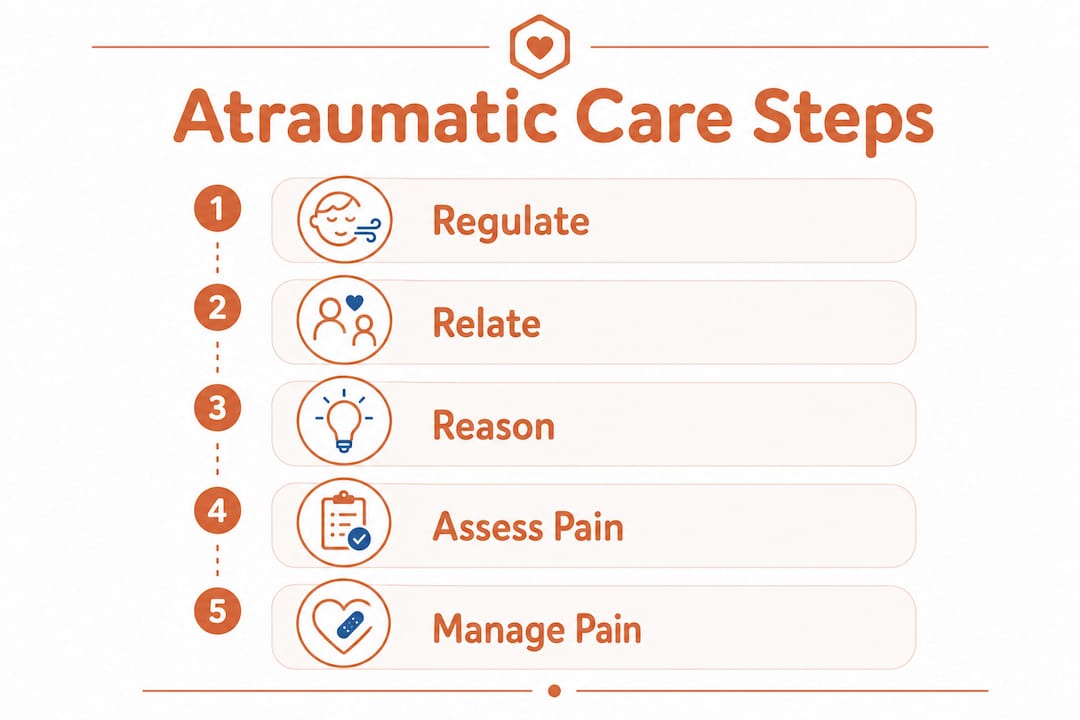
Multimodal pain management combines pharmacological and non-pharmacological methods. Neither approach alone produces the best outcome. A child who receives medication but no distraction or comfort positioning will still experience significant anxiety. The combination addresses both the physical sensation and the emotional response.
Non-pharmacological options for different ages include:
Infants (0–12 months): Sucrose or breastfeeding during painful procedures is a highly effective, low-risk analgesic. Offering it 2 minutes before a heel stick or injection reduces crying duration significantly.
Toddlers and preschoolers: Bubble blowing, pinwheels, and music redirect attention away from the procedure. These work because they require active participation, which occupies the brain’s fear response.
School-age children: Guided imagery and storytelling give the child a mental “place” to go during discomfort.
All ages: Comfort positioning and parental presence reduce the stress hormone response, which in turn lowers pain perception.
Enhanced Recovery After Surgery (ERAS) protocols represent the current clinical standard for postoperative pediatric pain. ERAS reduces opioid exposure by front-loading non-opioid analgesics and integrating non-pharmacological preparation before surgery. The result is faster recovery and less medication-related side effects for children.
Scheduled non-opioid analgesics combined with non-pharmacological interventions consistently outperform as-needed medication alone. “As needed” means the child must express pain before receiving relief. Scheduled dosing prevents that gap entirely.
Pro Tip: Before any planned procedure, ask the care team whether a pre-procedure sucrose dose or comfort positioning plan is already in place. If it isn’t, request one. You have every right to advocate for this.
What role do parents and caregivers play in delivering atraumatic care?
Parents are not passive observers in atraumatic care. They are active participants whose presence and behavior directly shape how a child experiences a medical procedure. Family-centered care is a core element of non-traumatic nursing techniques precisely because research shows parental presence lowers a child’s anxiety more reliably than most clinical interventions alone.
Parents can initiate distraction techniques independently, without waiting for a nurse’s instruction. Bubble blowing, singing a familiar song, or narrating a favorite story all shift the child’s focus away from the procedure. These are not tricks. They work because a child’s attention is genuinely limited, and occupying it with something familiar reduces the brain’s threat response.
Here are five actions you can take during any medical procedure:
Stay calm yourself. Children read parental anxiety faster than any monitor reads vital signs. A steady voice and relaxed posture signal safety.
Use therapeutic hugging. Hold your child securely in your lap or against your chest. This is not restraint. It is connection, and it reduces distress measurably.
Start distraction before the procedure begins. Waiting until the needle is visible is too late. Begin the song, the story, or the bubbles in the waiting room.
Use your child’s name and make eye contact. Direct, personal communication grounds a child in the present moment and in your relationship.
Praise effort, not bravery. Saying “you’re doing such a good job breathing” is more effective than “be brave.” It gives the child something concrete to do.
Pro Tip: Bring one familiar object from home, a stuffed animal, a small toy, or a blanket. Familiar sensory input lowers the stress response in children under 8, and it costs nothing.
How do trauma-informed communication techniques minimize psychological distress?
Language is a clinical tool in pediatric care. Trauma-informed communication using intentional language reduces fear by removing words that trigger a pain or threat response before the child has any direct experience of discomfort. The phrase “this will hurt a little” primes the brain for pain. The phrase “you’ll feel a little pressure” describes a sensation without the emotional loading.
Words and phrases to avoid during procedures include: “shot,” “hurt,” “pain,” “cut,” “poke,” and “it won’t be that bad.” Each of these either confirms a threat or minimizes a child’s concern, both of which increase anxiety. Replace them with sensation-based language: “you’ll feel cold,” “you’ll feel a squeeze,” “it will be over in ten seconds.”
Preparation videos and therapeutic play are two underused tools in this space. Showing a child a short video of another child calmly going through the same procedure reduces anticipatory anxiety. Therapeutic play, where a child practices on a doll before their own procedure, gives them a sense of control. Control is the opposite of trauma.
Nurse-led interventions alone show variable success in reducing post-hospitalization PTSD symptoms. This finding points to something important: communication and preparation must be theory-driven and consistent, not improvised. When nurses and parents use the same language and the same approach, the child receives a unified message of safety.
Pro Tip: Practice the language at home before a scheduled appointment. Say “the nurse will put a small squeeze on your arm” instead of “you’re getting a shot.” Children who hear the accurate, calm version at home arrive at the clinic less primed for fear.
Key Takeaways
Atraumatic care in pediatric nursing requires combining evidence-based pain management, family presence, and trauma-informed communication to prevent both physical and psychological distress in children.
Point | Details |
Fear is common and preventable | 66% of children fear medical procedures; structured frameworks like the 3R model reduce that fear before it becomes trauma. |
Pain needs multimodal management | Combining scheduled non-opioid medications with distraction and comfort positioning outperforms medication alone. |
Parents are active participants | Distraction techniques like bubble blowing and therapeutic hugging can be started by parents without clinical direction. |
Language shapes the experience | Avoiding pain-associated words and using sensation-based descriptions measurably reduces a child’s anticipatory anxiety. |
Consistency protects children | When nurses and caregivers use the same calm, prepared approach, children receive a unified signal of safety. |
What I’ve learned from watching families navigate medical procedures
The part most articles skip is this: the parent’s emotional state is the single most powerful variable in the room. I’ve seen children sail through IV placements because a parent was singing softly and holding them close. I’ve also seen children spiral into full panic during a simple blood pressure check because the adults around them were visibly tense and whispering.
Non-pharmacological comfort methods are consistently underestimated. Parents often assume that if a nurse hasn’t ordered something, it isn’t allowed or isn’t effective. That assumption costs children a lot of unnecessary distress. Sucrose for an infant, a familiar song, a firm and loving hold: these are not soft extras. They are evidence-based interventions that work.
Early intervention matters more than most families realize. A child who has one traumatic medical experience without proper support is more likely to resist future care, which creates a cycle that gets harder to break. The GAPP program and similar frameworks exist specifically to interrupt that cycle before it starts.
My strongest advice for any caregiver: advocate loudly and early. Ask about comfort positioning. Ask about pre-procedure preparation. Ask whether the nurse has training in developmentally appropriate interventions. You are not being difficult. You are doing exactly what your child needs you to do.
— Opulent
How Opulentprivatecare supports families with pediatric nursing at home
Families caring for medically complex children at home carry a weight that most clinical settings are not designed to address. Opulentprivatecare provides in-home pediatric nursing in Georgia with nurses trained in atraumatic care techniques, including therapeutic positioning, trauma-informed communication, and multimodal comfort strategies.
The 3 Thumbs Up Rule means your family, your assigned nurse, and Opulentprivatecare all agree before care begins. That process produces a consistent caregiver who knows your child, not a rotating roster of unfamiliar faces. For children managing tracheostomy, feeding support, or neurological conditions, that consistency is not a comfort. It is a clinical necessity. Families in Georgia can explore specialized pediatric home care options built around their child’s specific needs.
FAQ
What is atraumatic care in pediatric nursing?
Atraumatic care is a nursing approach that minimizes physical and psychological distress in children during medical procedures. It combines pain management, family involvement, therapeutic communication, and child-friendly environments to prevent fear from becoming lasting trauma.
How can parents reduce their child’s fear during medical procedures?
Parents can use therapeutic hugging, start distraction techniques before the procedure begins, and use calm, sensation-based language instead of words like “shot” or “hurt.” These actions lower a child’s stress response without requiring any clinical tools.
What non-pharmacological pain relief works for infants?
Sucrose or breastfeeding administered during painful procedures is a highly effective, low-risk analgesic for infants aged 0–12 months. Offering it approximately 2 minutes before the procedure reduces crying and physiological stress markers.
What is the 3R framework in pediatric care?
The 3R framework stands for Regulate, Relate, and Reason. It guides caregivers to first calm the child’s nervous system, then build connection, and finally offer age-appropriate explanations, in that order, before any procedure begins.
How often should pain be assessed in children after surgery?
Clinical guidelines recommend assessing severe pediatric pain every 2–4 hours, documenting location, quality, and intensity each time. Frequent assessment allows the care team to adjust both pharmacological and non-pharmacological interventions before pain escalates.
Recommended
Comments