
Pediatric Private Duty Nursing Salary: 2026 Pay Guide


What does a pediatric private duty nursing salary look like nationally?
Pediatric private duty nurses in the United States earn hourly rates below the broader pediatric RN average, with annual earnings varying widely depending on factors like Medicaid reimbursement and caseload complexity. That baseline sits close to the broader pediatric RN average of $45.42 per hour reported by the BLS, though private duty roles carry a different pay structure shaped by case-by-case Medicaid reimbursement rather than a fixed hospital wage scale.
Several factors push that number up or down before you ever accept an offer:
Licensure level (RN versus LPN/LVN)
Care complexity (ventilator or tracheostomy cases versus lower-acuity needs)
State Medicaid reimbursement rates, including programs like Georgia’s GAPP
Certifications and specialty training
Employer type (agency versus direct hire)
Geographic location and local cost of living
Compared to general pediatric nursing, private duty home care pays less on average than outpatient care centers ($102,640/year) or hospital settings ($96,830/year), but it offers scheduling flexibility and, for the right nurse, higher effective take-home pay through shift differentials and continuity bonuses.

How do salaries break down across pay percentiles?
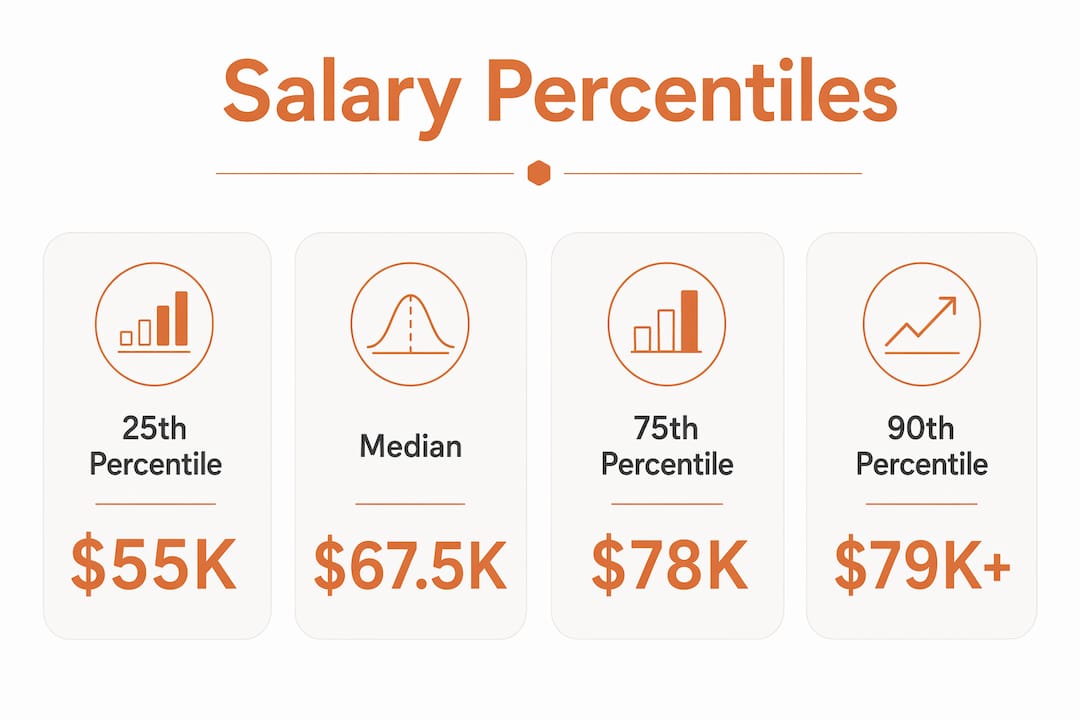
Pay in this specialty spreads wide. Salary.com data for private duty pediatric nurses at a representative pediatric services firm shows the following distribution:
25th percentile: $68,926 per year (approximately $33/hour). Entry-level nurses or those in lower-reimbursement states typically land here.
Median (50th percentile): a mid-range amount per year ($36/hour). This is the realistic midpoint for an experienced private duty nurse without specialty certifications.
75th percentile: $84,975 per year (higher hourly rates. Nurses managing complex cases or holding pediatric specialty credentials tend to reach this band.
90th percentile: higher annual salaries. High-acuity specialists in well-reimbursed states push into this range.
$84,975 is the 75th percentile annual salary for private duty pediatric nurses, meaning one in four earns above this figure, often due to certifications or complex case assignments.
The spread from the 25th to the 90th percentile is roughly $24,000 per year. That gap is almost entirely explained by three variables: licensure, case complexity, and geography.
Which states and cities pay the most for pediatric home care nurses?
Location shapes private duty pediatric nurse wages more than almost any other single factor. State Medicaid reimbursement rates set a ceiling on what agencies can pay, and cost-of-living adjustments layer on top of that.
State | Annual Salary | Hourly Wage |
Washington | among the highest salaries nationally | |
District of Columbia | among the highest salaries nationally | |
New York | among the highest salaries nationally | |
Massachusetts | among the highest salaries nationally | |
Alaska | among the highest salaries nationally | |
California | higher mid-range salaries | |
Georgia | moderate pay levels | |
Florida | lower salary levels |
Source: Nurse.Org pediatric nurse salary by state, 2026 data.
Top-paying cities and states for private duty pediatric nursing pay:
Washington state leads nationally at $124,010/year
San Francisco, CA reaches $83.83/hour for RNs according to BLS data
New York and Massachusetts both exceed $119,000 annually
Georgia sits at $92,453, supported partly by the GAPP Medicaid program that funds skilled pediatric nursing hours at home
Florida and Texas trail the national average, reflecting lower Medicaid reimbursement floors
Rural areas within any state consistently pay less than metro markets, regardless of the state’s overall ranking.
What related job titles earn in pediatric private duty nursing
The private duty pediatric nursing field includes several distinct roles, each with its own pay band:
Pediatric RN (private duty): $76,259–$98,454 annually, with an average of $86,810 per year
LPN/LVN (private duty): Typically earns a range of hourly pay typical for LPN/LVN private duty roles in home care settings, placing annual income in the $43,000–$74,000 range depending on hours and state
Pediatric RN in outpatient care: higher average salaries in outpatient care centers
Pediatric RN in hospital settings: higher average salaries in hospital settings
Home health RN (general): average salaries in general home health care, slightly below private duty RN rates at specialized pediatric agencies
Advanced practice roles (CRNA, FNP, APRN): Salary.com places the best-paying pediatric RN positions at a typical salary range for advanced pediatric RN roles, with advanced practice roles pushing well beyond that band
RNs consistently out-earn LPNs/LVNs in private duty settings, often by $15,000–$20,000 annually, because they can manage higher-acuity cases that attract higher Medicaid reimbursement.
Where does salary data come from, and how reliable is it?
No single source owns the definitive number for private duty nurse wages. Each major platform uses a different methodology, which is why you will see figures that look contradictory:
BLS (Bureau of Labor Statistics): Surveys employers directly; the most methodologically rigorous source, but lags by 12–18 months and does not always isolate private duty roles
Salary.com: Aggregates employer-submitted compensation data; useful for percentile breakdowns by company
ZipRecruiter: Pulls from job postings; tends to skew higher because posted salaries attract applicants
PayScale: Collects self-reported data from individual nurses; PayScale reports a 2026 average of $34.81/hour, lower than BLS figures, partly because respondents include part-time workers
Pro Tip: When evaluating an offer, convert everything to an hourly equivalent. A salaried position at $80,000 with mandatory overtime built in may pay less per hour than an agency role at $38/hour with true 40-hour weeks.
Hourly versus salaried reporting creates real confusion. Agency nurses are almost always paid hourly, while some hospital-based pediatric roles carry annual salaries. Comparing them directly without normalizing to hours worked produces misleading conclusions.
How licensure, certifications, and care complexity affect your pay
RN licensure is the single biggest pay lever in private duty pediatric nursing. An RN managing a child on a home ventilator or with a tracheostomy commands a materially higher rate than an LPN handling lower-acuity needs, because the Medicaid reimbursement tied to that child’s care plan reflects the clinical skill required.
Certification bonuses and shift differentials can increase hourly rates by 10–15% above base pay. Pediatric specialty credentials, such as the Certified Pediatric Nurse (CPN) designation, signal clinical competence that agencies use to justify higher billing rates, and those savings flow back to the nurse. High-acuity assignments, including ventilator or tracheostomy management, consistently sit at the top of the private duty pay scale.
Nurses who specialize in complex pediatric care and hold advanced certifications consistently reach the 75th–90th percentile of private duty pay.
Agencies that prioritize long-term nurse-family matching, like Opulentprivatecare’s 3 Thumbs Up Rule, also contribute to effective compensation stability. Consistent case placement means fewer unpaid gaps between shifts, which raises actual annual earnings even when the base hourly rate looks similar to competitors.
Benefits and total compensation beyond base pay
Base hourly rate is only part of the picture. Private duty pediatric nurses often receive a benefits package that varies sharply between agency-employed and directly hired positions.
Agency nurses typically receive health insurance, paid time off, and sometimes 401(k) contributions, but benefit quality varies widely. Directly hired nurses working under family-managed Medicaid programs may earn a higher hourly rate but carry their own benefits costs. Shift differentials for nights, weekends, and holidays add meaningfully to total compensation, and some agencies offer retention bonuses after 6 or 12 months of continuous placement.
How working hours and overtime shape annual earnings
Most private duty pediatric nursing shifts run 8 or 12 hours, with overnight and weekend shifts common for medically fragile children who need round-the-clock coverage. Nurses who consistently work nights or weekends benefit from shift differential pay, which typically adds $2–$5 per hour above the base rate.
Federal overtime rules under the Fair Labor Standards Act require time-and-a-half pay for hours worked beyond 40 in a week for most agency-employed nurses. A nurse averaging 45 hours per week at a $38 base rate earns the equivalent of roughly $42 per hour on those extra five hours, which adds up across a full year.
Agency-employed versus directly hired: which pays more?
The answer depends on what you count. Agency-employed nurses typically earn a lower base hourly rate but gain access to benefits, guaranteed shift coverage, and administrative support. Direct-hire arrangements under family-managed Medicaid waivers often pay a higher hourly rate because the family retains the administrative margin the agency would otherwise keep.
The tradeoff is real. Direct-hire nurses absorb their own taxes, benefits, and scheduling gaps. Agencies absorb those costs and risks in exchange for a cut of the reimbursement rate. For nurses who value consistent placement and predictable income, a well-run agency often produces higher net annual earnings despite the lower headline rate.
Salary trends and where pay is heading
Pediatric private duty nursing pay has trended upward over the past several years, driven by a persistent nursing shortage and growing demand for home-based care for medically complex children. The job outlook for pediatric nurses carries an expected growth rate of 6% from 2021 to 2031, and private duty roles have benefited disproportionately as families and payers push care out of hospitals and into the home.
State Medicaid reimbursement increases, particularly in states that have expanded home and community-based services waivers, have translated directly into higher pay floors for private duty nurses. Georgia’s GAPP program is one example of a state-funded mechanism that supports skilled nursing hours at home for children with complex needs, keeping demand and pay stable for nurses in that market.
Key Takeaways
Pediatric private duty nursing salary in the United States centers around $37.50 per hour and $78,000 annually, with licensure, care complexity, and geography driving the widest pay differences.
Point | Details |
National baseline pay | Private duty pediatric nurses average $37.50/hour or $78,000/year before state and shift adjustments. |
Percentile spread | Salaries range from $68,926 at the 25th percentile, $78,000 at the median, $84,975 at the 75th percentile, to $93,422 at the 90th percentile annually. |
Top-paying states | Washington ($124,010/year) leads; Georgia sits at $92,453/year. |
Certifications boost pay | Specialty credentials and complex case assignments can raise hourly rates by 10–15% above base. |
Agency vs. direct hire | Agency roles offer benefits and stability; direct-hire arrangements often pay a higher hourly rate but shift costs to the nurse. |
Recommended
Comments